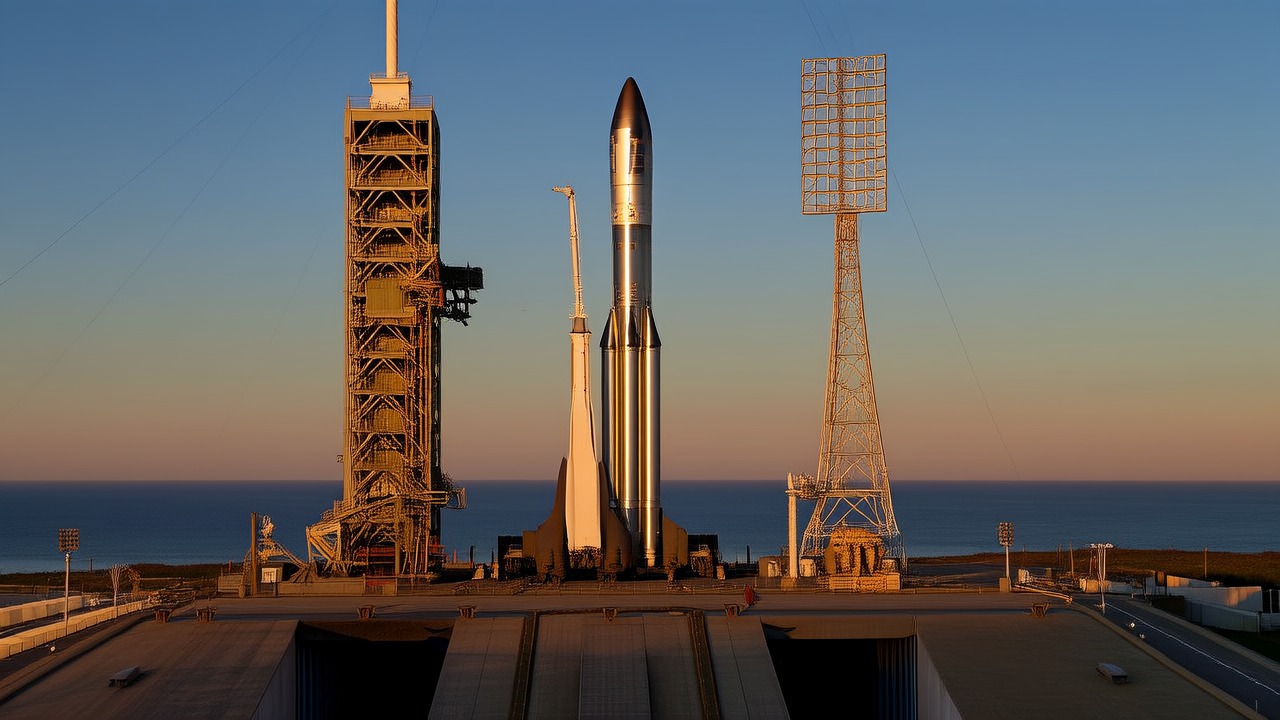
In a recent CNBC interview, SpaceX President Gwynne Shotwell confirmed the potential launch of Starship Flight 15 from Cape Canaveral and emphasized the company's progress toward regular monthly Starship flights. Shotwell reaffirmed SpaceX's objective of completing orbital injection and re-entry testing by the end of 2026.
This announcement marks a significant acceleration phase in the Starship development program. From Flight 1 through Flight 14, SpaceX has accumulated extensive data addressing critical technical challenges — from thermal protection systems to propellant transfer and engine restart in space. Flight 14's successful Super Heavy booster return-to-launch-site capture validated SpaceX's rapid reusability architecture. Flight 15 represents more than an incremental step; it signals SpaceX's paradigm shift from "development testing" to "operational flight" — a milestone the team has been working toward for years.
Monthly Flight Cadence: A Qualitative Shift
Shotwell's "monthly Starship flights" target reflects rapidly growing confidence in Starship system reliability. Drawing from SpaceX's extensive experience with Falcon 9 — which flew over 400 times before its first failure — frequent flight is the most effective means of discovering boundary condition issues and accelerating iterative improvement.
Flight frequency has already increased significantly in the first half of 2026. The gap between Flights 12 and 13 narrowed from months to weeks. Achieving monthly cadence in the second half of 2026 would far exceed any large rocket's historical testing pace — NASA's SLS launches once per year, and the Soviet N-1 rocket conducted only 4 flights between 1969-1972.
Key enablers for monthly flight:
- Production maturity: Continuous Starbase factory output of both Starship upper stage and Super Heavy booster, with Raptor 3 engine production scaling up
- Launch pad throughput: Cape Canaveral's Pad 39A modifications nearing completion, enabling alternating launches between Texas and Florida
- FAA licensing evolution: Transitioning from individual launch approvals to batch licensing, dramatically reducing administrative turnaround
- Closed-loop learning: Each flight generates data immediately fed into design improvements
Flight 15 Technical Objectives
While Shotwell did not disclose specific mission details, based on prior flight progression and public SpaceX objectives, Flight 15 core test objectives likely include:
- Orbital injection demonstration: Starship's first full orbital velocity flight — a critical prerequisite for lunar and Mars missions. Flight 14 conducted suborbital testing; Flight 15 targets the orbital milestone.
- Orbital re-entry validation: Testing improved thermal protection system at orbital velocities, following multiple heat shield tile design iterations. Atmospheric re-entry heating is among Starship's most severe engineering challenges.
- In-space propellant transfer: Further validating on-orbit propellant transfer technology — the critical enabler for Starship's role as NASA's lunar lander (HLS), requiring hundreds of tons of on-orbit fueling.
- Engine vacuum restart: Testing Raptor engine multiple-ignition capability in vacuum conditions, essential for orbital maneuvers and eventual landing.
Additionally, SpaceX continues advancing Starship refurbishment and rapid reuse. Flight 14's successful Super Heavy booster capture at the launch tower validated a key rapid-reuse component — if Flight 15's Starship upper stage also returns successfully, it would constitute a complete rapid reuse demonstration.
Strategic Context: Testing to Operations
The strategic significance of monthly Starship flights extends far beyond engineering validation:
Artemis timeline: NASA depends on Starship as the Human Landing System (HLS) for Artemis III (earliest 2027) and subsequent missions. Each HLS requires hundreds of tons of on-orbit propellant — necessitating multiple tanker refueling flights. Monthly flight cadence accelerates these critical tests, supporting NASA's 2027-2028 crewed lunar landing window. The success of Artemis III depends substantially on Starship operational maturity — a dependency NASA cannot substitute with any other vehicle.
Starlink Gen 3 deployment: Starship is the only vehicle capable of deploying Starlink Gen 3 satellites at scale — hundreds per launch, each with multiple times the bandwidth of Gen 2. With Starlink surpassing 6 million subscribers, bandwidth demand grows exponentially. Operational Starship is critical to Starlink's business model; any delay constrains growth to Falcon 9's limited payload capacity.
Mars architecture validation: Elon Musk has repeatedly stated that Starship's ultimate goal is Mars colonization. But regular Earth-Mars service requires first achieving routine Earth orbit operations. Monthly flights build the operational experience, ground infrastructure, and supply chain depth SpaceX needs. Orbital injection capability by end of 2026 is the essential first step on the path to Mars.
Market Position and Competitive Landscape
Starship's monthly flight target is reshaping the global launch services market. Current Starship per-launch cost (production + operations) is estimated at $30-90 million — and will decline further with monthly cadence. With 100+ tons to low Earth orbit capacity, Starship's per-kilogram cost drops to hundreds of dollars — an order of magnitude below any currently operational rocket.
Competitive dynamics:
- NASA SLS: ~$4 billion per launch, once per year maximum. Starship operationalization makes SLS's cost disadvantage even more stark, intensifying internal NASA debate about continued SLS funding.
- Blue Origin New Glenn: Still accumulating data from debut orbital flight; orbital reuse not yet demonstrated. Progress significantly slower than Starship.
- China Long March 9: Still in development, targeting 2028-2030 first flight. Starship's rapid progress creates strategic pressure on China's space program.
- Rocket Lab Neutron: First flight planned late 2026; competitive in small launch but cannot compete with Starship's capacity.
- ULA Vulcan: Expendable upper stage; cost structure cannot compete with Starship's reuse model.
Starship operationalization will trigger a profound restructuring of the global launch market — similar to Falcon 9's disruption in the 2010s, but at greater depth.
Risks and Challenges
Monthly flight targets face significant technical and regulatory risks:
- Thermal protection durability: Heat shield tile degradation rates across multiple flights remain a key concern. Current post-flight refurbishment data indicates tile inspection and replacement hours remain too high for rapid turnaround.
- FAA regulatory uncertainty: While licensing is transitioning to batch approval, any flight anomaly could trigger program suspension — similar to the FAA's multi-month investigation after Flight 2 in 2023.
- Supply chain pressure: Each Starship requires 39 Raptor 3 engines (33 on Super Heavy + 6 on Starship). Raptor production ramp remains a manufacturing challenge despite factory expansion.
- Capital burn rate: Even for SpaceX, monthly operations mean burning a multi-million-dollar Starship every month. Development and operations costs may reach hundreds of millions monthly.
Observatory Analysis
Starship Flight 15 and the monthly flight target represent a fundamental change in humanity's access to space. From the Space Shuttle (~$450M per launch, max 8/year) to Starship (targeting tens of millions per launch, monthly), per-unit launch costs decline by two orders of magnitude. This is not merely engineering progress — it is an economic paradigm shift.
What truly matters is not the rocket technology itself, but the business models this capacity revolution unlocks. If Starship achieves monthly flight:
- Large constellations: Deployment costs fall 80%+, enabling more operators to build their own constellations
- Space manufacturing: Frequent low-cost transport makes in-orbit manufacturing and 3D printing economically viable
- Space tourism: High-capacity crewed flights dramatically reduce orbital tourism costs
- Lunar cargo and infrastructure: Artemis supply lines depend on Starship capacity
From an investment perspective, Starship operationalization is the most important catalyst for the space economy in 2026-2027. If SpaceX achieves regular orbital flight by end of 2026, Starlink's IPO valuation (currently ~$75B) could surge further, and SpaceX's own valuation (~$350B) could be substantially revised upward. Starship's success or failure will determine not just SpaceX's commercial prospects, but the pace and direction of all human space activity for the next decade.
Disclaimer: The information contained in this article is for reference only and does not constitute investment advice or business decision-making basis. Data and time-sensitive information are accurate as of the publication date and may change with subsequent developments. Neither the author nor POC.HK assumes any responsibility for losses resulting from the use of this information.