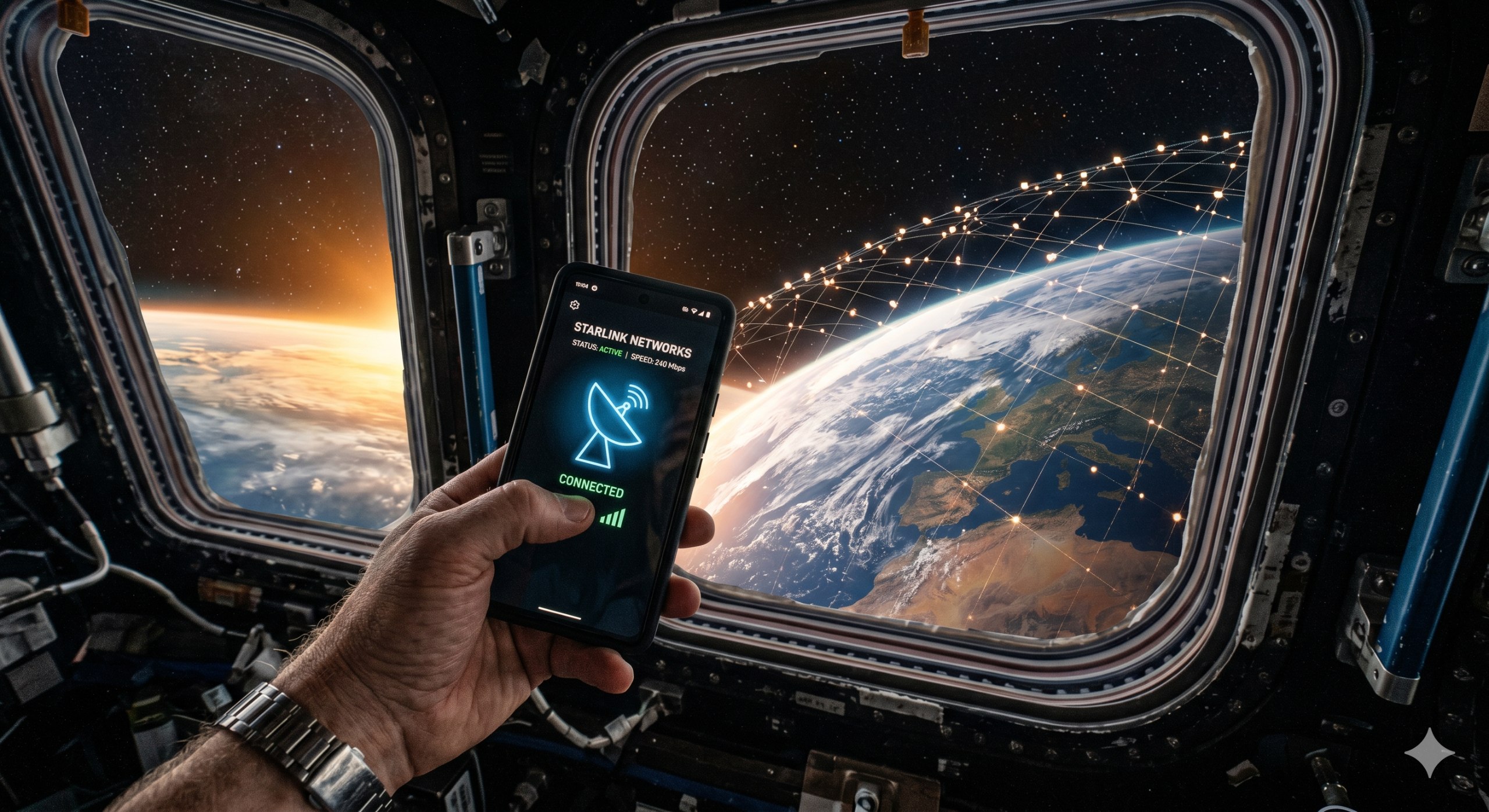
Starlink Direct-to-Cell Goes Global: Emergency SOS in 100 Countries
SpaceX has expanded its Starlink Direct-to-Cell service to over 100 countries, bringing satellite connectivity to ordinary smartphones without any hardware modifications. The milestone, announced in early 2026, represents one of the most ambitious expansions of mobile connectivity in history.
"What started as an emergency service has become a full communications platform," said a SpaceX spokesperson. "Any phone, anywhere, can now connect to our satellites."
How It Works
Starlink Direct-to-Cell uses the company's second-generation (V2) satellites equipped with custom eNodeB modems that communicate directly with unmodified smartphones. The satellites use advanced beamforming and phased-array antennas to manage the enormous signal challenges of communicating with low-power phones from orbit.
The system operates in two modes. In standard messaging mode, users can send and receive SMS messages through the satellite link, with no app or carrier change required. In emergency SOS mode, phones can automatically connect to Starlink when no terrestrial cellular network is available and place emergency calls with precise location data.
The satellites use L-band spectrum licensed from T-Mobile in the United States and similar partnerships with mobile network operators in other countries. This regulatory approach — working within existing spectrum licenses held by partner carriers — has been key to the rapid international expansion.
Global Coverage
As of May 2026, Starlink Direct-to-Cell covers 100 countries across North America, South America, Europe, Africa, Asia, and Oceania. The service is available anywhere within the coverage footprint of SpaceX's V2 satellite constellation, which now numbers over 2,000 satellites equipped with direct-to-cell capability.
Coverage gaps remain in polar regions and parts of the Pacific and Indian Oceans, but SpaceX is filling them at a rate of roughly 20 to 30 new direct-to-cell satellites per launch. The company expects near-global coverage by mid-2027.
Emergency SOS Impact
The emergency SOS capability has already proven its value. In the first quarter of 2026 alone, SpaceX reported over 5,000 emergency activations from Starlink Direct-to-Cell — hikers lost in remote areas, sailors in distress, victims of natural disasters, and travelers stranded in zones without cellular coverage.
In several cases, the service has been credited with saving lives. After a 7.2 magnitude earthquake struck a remote region of Papua New Guinea in February 2026, collapsing terrestrial cell towers, survivors used Starlink Direct-to-Cell to send SOS messages that guided rescue teams to their locations. In Thailand, a tour group stranded by flash floods used the service to coordinate their own rescue.
Carrier Partnerships
SpaceX has signed agreements with over 50 mobile network operators worldwide, including T-Mobile (USA), Rogers (Canada), KDDI (Japan), Optus (Australia), One NZ (New Zealand), and Salt (Switzerland). The partnerships are structured as roaming agreements: when a subscriber's phone cannot find a terrestrial signal, it roams onto the Starlink network automatically.
For mobile operators, the appeal is clear. Direct-to-cell satellite connectivity allows them to offer coverage guarantees in areas where building terrestrial infrastructure is uneconomic — rural regions, mountain passes, and along highways. Instead of losing subscribers who move to areas with poor coverage, carriers can now promise near-total national coverage.
Future Capabilities
SpaceX has announced that voice calls and basic data connectivity (at 1-10 Mbps) will be added to the Direct-to-Cell service later in 2026. The current generation of V2 satellites supports these capabilities in hardware, but software upgrades and regulatory approvals are still in progress.
The company is also working on direct-to-cell support for IoT devices, opening up applications in agriculture, logistics, environmental monitoring, and asset tracking. A cattle rancher in Australia, for example, could deploy sensors that report location and health data via Starlink without any additional satellite hardware.
Comparison to Alternatives
Apple's iPhone 14 and later models include satellite SOS via Globalstar, but this is limited to emergency messaging and requires pointing the phone at the sky. Starlink Direct-to-Cell works with any phone, provides regular texting, and operates automatically in the background without user intervention.
AST SpaceMobile, a competitor, has also demonstrated direct-to-phone satellite connectivity but is still in early deployment with fewer than 100 satellites in orbit. Starlink's head start in constellation size gives it a significant coverage advantage.
The Bottom Line
Starlink Direct-to-Cell is transforming satellite communications from a niche service requiring specialized equipment into a universal capability that every phone user can access. The expansion to 100 countries makes it a truly global service, and the addition of voice and data later this year will broaden its utility even further. For anyone who has ever found themselves without cellular signal, the future is arriving.
Disclaimer: This article is for informational purposes only and does not constitute financial, technical, or investment advice. The views expressed are based on publicly available information as of the date of publication. Readers should conduct their own research and consult with qualified professionals before making any decisions based on this content.