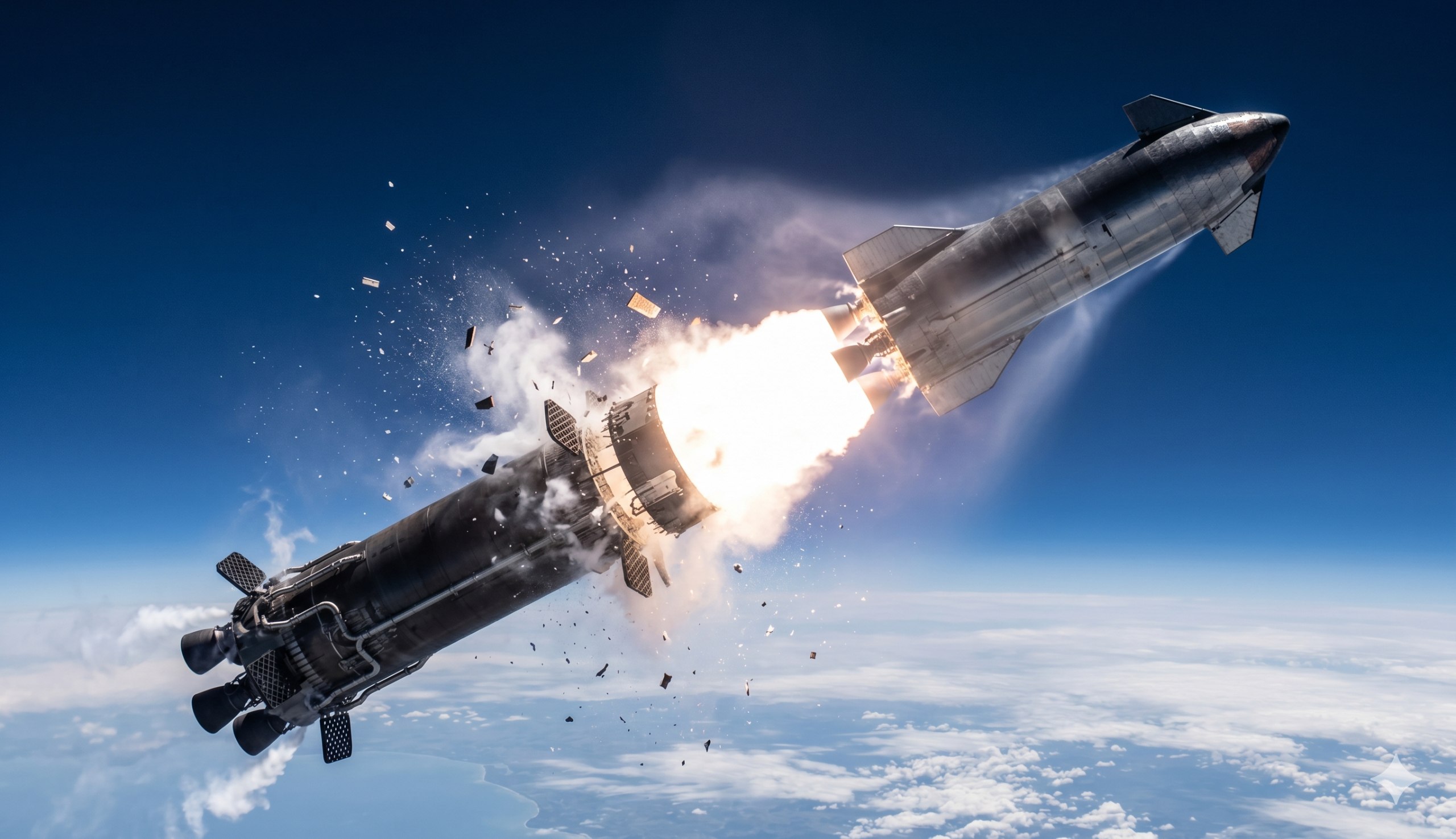
Starship Progress Report: The Transition Year from Technology Demonstration to Production Operations
For SpaceX's Starship program, 2026 marks a transition year from "technology demonstration" to "operational production." As of May 2026, Starship has completed a total of 9 integrated flight tests (IFT-1 through IFT-9), with launch frequency increasing from 3 per year in 2024 to the current 4 to 6 per month, targeting weekly launches by 2027. Behind this launch cadence increase lies a comprehensive upgrade of Starship production lines and ongoing expansion of launch infrastructure.
Building Production Capacity
Starbase in Boca Chica, Texas, completed construction of Mega Bay 2 in 2025. This production facility, covering approximately 45,000 square meters, is equipped with 9 state-of-the-art stainless steel automated welding robots, increasing Starship hull production speed from 1.5 per month in 2024 to 4 per month in 2026. The second stage (Ship) production cycle has been reduced from 6 months to 4 months, while the first stage (Super Heavy booster) cycle dropped from 8 months to 5 months.
More importantly, SpaceX achieved a production breakthrough for the Raptor 3 engine in Q4 2025. Raptor 3's design simplifies approximately 40% of parts count and reduces per-engine production cost from approximately $2.5 million in the Raptor 2 era to approximately $1.5 million. For a single Starship flight using 33 Super Heavy engines and 6 Ship engines, total engine cost drops from approximately $97.5 million to approximately $58.5 million — not yet accounting for the amortization effect of reuse.
Key Milestones of 2026
Five core achievements have been completed or are in progress in 2026. The first is the first full orbital landing and recovery: IFT-8's Super Heavy booster achieved a precise catch by the launch tower's "Mechazilla" chopstick arms, marking the second successful catch after IFT-5, proving the technology's repeatability.
The second is the second stage (Ship)'s first controlled atmospheric reentry and landing. IFT-7's Ship, after completing approximately 90 minutes of orbital flight, successfully executed a high-angle reentry maneuver and achieved a precision splashdown at a predetermined Gulf of Mexico landing point, with error of only approximately 200 meters — far below the 1 to 2 kmdeviationin previous tests. This paves the way for future land-based landing tests.
The third — and most important — is IFT-9's completed propellant orbital transfer demonstration (see this Observatory's feature article "Orbital Refueling: The Infrastructure Tipping Point for Human Space Activity"). This marks humanity's first large-scale cryogenic propellant transfer between large spacecraft in orbit, signaling a paradigm shift in space infrastructure.
The fourth is the successful deployment of the first Starlink V3 mini-satellites from Starship. IFT-6 tested Starship's payload bay door opening and satellite deployment mechanisms in December 2025, successfully releasing 24 simulated payloads. IFT-8 in February 2026 deployed the first 12 real Starlink V3 satellites — each weighing approximately 1.5 tons, with 6 times the communications capacity of the V2 Mini version.
The fifth is Starship's first crewed certification test. In April 2026, SpaceX completed NASA-required Preliminary Design Review (PDR) for crewed Starship, confirming that life support systems, emergency escape systems, and radiation protectionplandesign meet Artemis crewed landing mission requirements.
Simultaneous Infrastructure Expansion
The bottleneck for Starship's routine operations lies not only in the rocket itself but also in ground infrastructure. Starbase completed construction of a second launch tower (Orbital Launch Tower B) between 2025 and 2026, giving the site the capability to prepare two launches simultaneously. SpaceX also added oneultra-large liquid oxygen tank (capacity approximately 10,000 tons) and two methane tanks, reducing single launch preparation cycle from 14 days to 7 days.
Starship modification work at Kennedy Space Center's (KSC) LC-39A launch pad in Florida resumed construction in March 2026. This legendary launch pad, once used for Saturn V and the Space Shuttle, will be equipped with a brand-new Starship-specific launch tower and propellant storage facilities, expected to be operational by mid-2027. Once KSC's launch capability comes online, Starship's total launch capacity will increase to 12 to 16 per month.
At the Brownsville, Texas launch control center, SpaceX deployed a new automated flight termination system (AFTS) and launch scheduling management AI system. This AI system can automatically generate optimized launch schedules based on weather conditions, offshore debris zone status, and orbital target windows, reducing launch delay rates due to uncontrollable factors such as weather from approximately 30% in 2024 to approximately 12% in 2026.
Mission Diversification
As Starship's operational capabilities improve, its mission types have also expanded fromsingle-purpose test flights to diversified commercial and government missions. In commercial communications, Starship has assumed the primary deployment role for the Starlink V3 constellation. A single Starship launch can deploy 60 to 80 Starlink V3 satellites, compared to Falcon 9's 20 to 22, representing a 3 to 4 times improvement in deployment efficiency.
For science missions, NASA has confirmed it will use Starship in 2027 to launch key components of the "Optical and Infrared Flagship Telescope" (tentatively named LUVOIR-B). Starship's 7-meter diameter fairing — essentially the entire Starship payload bay — can accommodate giant telescope mirrors that no other current rocket can contain.
In defense, the U.S. Space Force (USSF) signed a $250 million contract with SpaceX in December 2025 for a "responsive space launch" demonstration — launching a military satellite within 24 hours of notification using Starship. This is the ultimate test of Starship's rapid turnaround capability.
Observatory Analysis
From an independent analytical perspective, the biggest change for the Starship program in 2026 is its transformation from "SpaceX's own project" into a "national strategic asset." Artemis program dependence on Starship HLS, Starlink V3 deployment demand for Starship's payload capacity, and USSF interest in responsive launch all mean that Starship's success or failure is no longer just SpaceX's concern.
On costs, SpaceX's target is to reduce Starship's per-launch cost (including reuse) to approximately $10 million to $20 million — seemingly close to Falcon 9's approximately $15 million to $20 million (including reuse), but considering Starship's payload capacity is approximately 10 times that of Falcon 9 (100 tons versus 15.6 tons), per-ton launch costs will decrease by approximately 80% to 90%.
Looking Ahead
Looking forward 12 months, Starship's keyhighlightsinclude: first crewed flight test (planned Q4 2026), first USSF responsive launch demonstration (H2 2026), and first uncrewed lunar mission (early 2027). 2027 will be the turning point year for Starship to transition from "frequent testing" to "commercial operations."
Long-term, Starship is not merely a rocket — it is aentirely newspace transportation paradigm, whose influence will surpass any single space system since the Space Shuttle's retirement. From lunar bases to Mars colonization, from giant telescopes to space manufacturing, Starship is becoming the core transport backbone of all human space activity.
Disclaimer: This article is written by POC.HK Future Technology Observatory based on publicly available information and independent analysis. The launch plans, technical parameters, and financial data mentioned are from SpaceX public disclosures, NASA contract documents, and third-party analysis; actual progress may differ due to technical and regulatory factors.