The Quantum Error Correction Era Begins: The Deep Significance of 99.9% Fidelity
The greatest obstacle to quantum computing's transition from academic demonstration to practical tool has always been the fragility of qubits — any environmental noise can cause computational errors. Between 2024 and 2025, Google Quantum AI and the Harvard team independently demonstrated logical qubit fidelity breakthroughs exceeding 99.9%, marking the transition of quantum error correction from theory to engineering practicality.
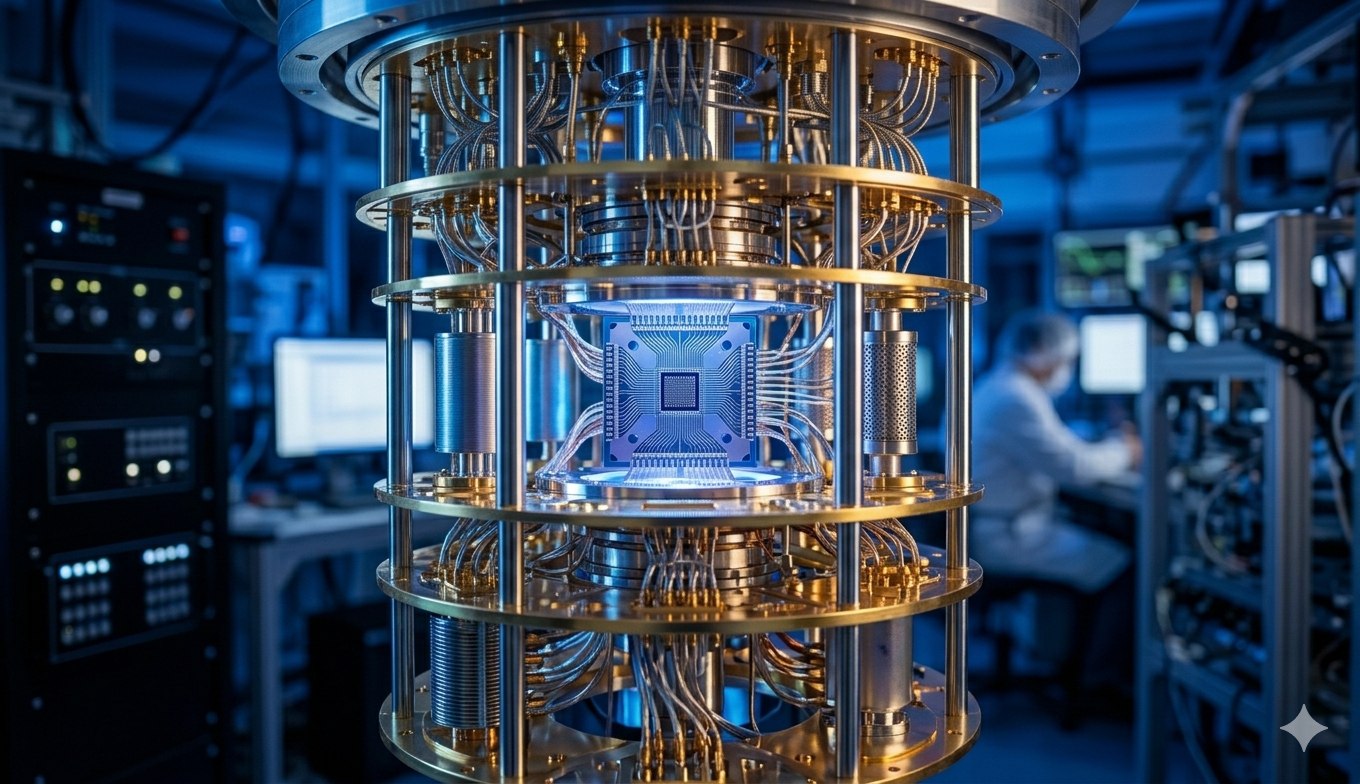
Both teams adopted the Surface Code error correction scheme, but with vastly different implementation paths. Google used superconducting qubit arrays (Willow chip), encoding 1 logical qubit from 49 physical qubits in a 7x7 array. Harvard based its approach on neutral atom systems, using laser tweezers to precisely manipulate 48 rubidium atoms. Both routes confirmed the core prediction of error correction theory: increasing the number of physical qubits can effectively reduce logical error rates.
The practical significance of 99.9% fidelity is that errors occur only once per 1,000 operations, which is already sufficient to support certain specific applications. More importantly, it verifies that the "error threshold" has been crossed — the error rate is low enough that it can be further suppressed by adding more physical qubits.
The next key step lies in scaling the number of logical qubits. The current few dozen logical qubits are insufficient to run practical-grade quantum algorithms. Academic consensus suggests that systems with 1,000 logical qubits — expected to be realized between 2028 and 2030 — will be the true tipping point for quantum computing moving from demonstration to commercialization.