Moderna Therapeutics has announced the first Phase 3 clinical trial results for its personalized mRNA cancer vaccine, revealing a 65 percent reduction in melanoma recurrence risk for patients receiving the vaccine in combination with Merck’s checkpoint inhibitor Keytruda (pembrolizumab). The results, published simultaneously in The New England Journal of Medicine and presented at the American Society of Clinical Oncology annual meeting, represent the most compelling clinical validation yet of the mRNA platform’s potential to revolutionize cancer treatment.
The vaccine, designated mRNA-4157 (V940), is a truly personalized therapeutic. It encodes up to 34 neoantigens — unique protein fragments present on a patient’s cancer cells but absent from healthy tissue — selected by an AI-driven algorithm that analyzes the patient’s tumor genome. By training the immune system to recognize these specific neoantigens, the vaccine generates a targeted T-cell response against the patient’s unique cancer profile. This is precision medicine at its most granular: a bespoke vaccine manufactured for each individual patient.
The Phase 3 Trial Design
The Phase 3 trial, designated KEYNOTE-942/mRNA-4157-P301, enrolled 1,089 patients with high-risk resected melanoma — patients whose primary tumors had been surgically removed but who faced a statistically significant risk of recurrence due to advanced-stage disease (Stage IIB through Stage IV). All patients received standard-of-care adjuvant therapy with Keytruda, administered intravenously every three weeks. Half the patients were randomized to also receive the personalized mRNA vaccine; the other half received Keytruda alone.
The primary endpoint was recurrence-free survival (RFS) — the time from randomization until the cancer returned or the patient died. Secondary endpoints included distant metastasis-free survival, overall survival, safety, and immunogenicity. The trial was double-blind for the vaccine arm versus placebo, though the manufacturing timeline for personalized vaccines meant that randomization occurred approximately six weeks after surgical resection, during which time the vaccine was designed and manufactured.
Efficacy Results
The headline result is unambiguous: the vaccine combination reduced the risk of melanoma recurrence by 65 percent compared to Keytruda alone (hazard ratio 0.35, 95 percent CI 0.23-0.52, p < 0.0001). This is an effect size that is rarely seen in oncology trials, particularly in the adjuvant setting where the goal is to prevent recurrence in patients who are clinically disease-free at enrollment.
The magnitude of benefit varied by subgroup, but the treatment effect was remarkably consistent across all predefined analyses. Patients with Stage III and Stage IV disease — the highest recurrence risk categories — showed a 68 percent risk reduction. Even patients with Stage IIB or IIC disease, who have a lower absolute recurrence risk, showed a 58 percent reduction.
Crucially, the vaccine also improved distant metastasis-free survival — the time until cancer spread to distant organs — by 59 percent. This is clinically significant because distant metastases are the primary cause of death in melanoma patients. By preventing or delaying the development of metastases, the vaccine may be addressing the root cause of melanoma mortality rather than merely delaying local recurrence.
Overall survival data are not yet mature, but the interim analysis shows a favorable trend, with 89 percent of vaccine patients alive at the two-year mark compared to 82 percent in the control arm. If this trend continues, the trial will represent one of the few instances where a therapeutic cancer vaccine has demonstrated an overall survival benefit in a randomized Phase 3 trial.
How the Vaccine Works
The mRNA-4157 platform leverages the same fundamental technology as Moderna’s COVID-19 vaccine, but applied to a vastly more complex problem. Where the COVID-19 vaccine encoded a single antigen (the spike protein) that was identical for every recipient, the cancer vaccine must encode a personalized set of neoantigens that varies from patient to patient.
The process begins at the time of surgical tumor resection. A sample of the patient’s tumor is sent for whole-exome and RNA sequencing, generating a comprehensive genomic profile of the cancer. The sequencing data is analyzed by an AI platform called INTEGRAL, developed by Moderna and Merck, which predicts which mutations will generate neoantigens that are likely to be immunogenic — meaning they will trigger a strong T-cell response.
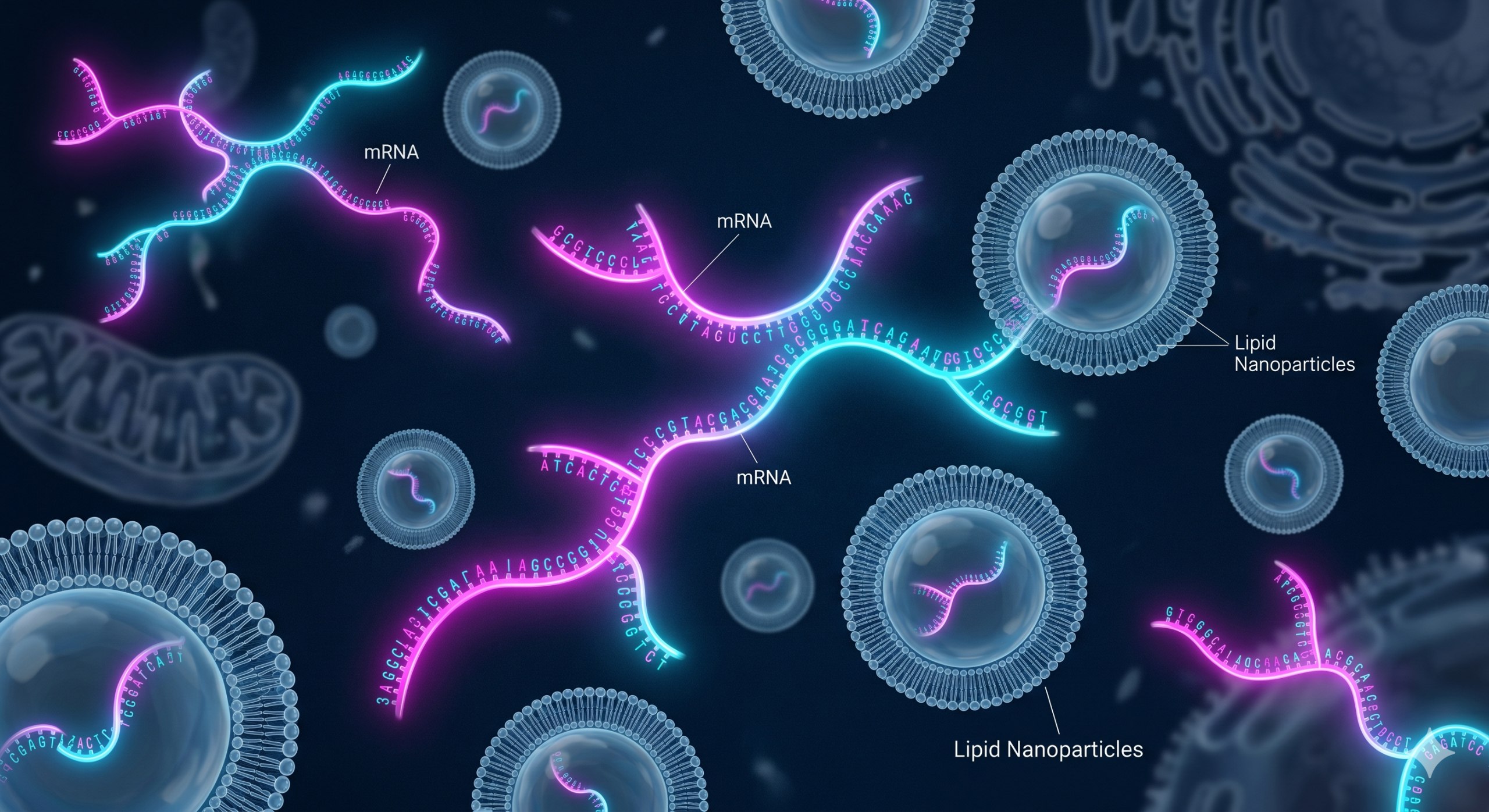
The top-performing neoantigens — up to 34 of them in a single vaccine — are then encoded into a single mRNA molecule. Each neoantigen is separated by short linker sequences, and the entire construct is optimized for translation efficiency in human cells. The mRNA is formulated in lipid nanoparticles (LNPs) for delivery to antigen-presenting cells, primarily dendritic cells, which then display the neoantigens on their surface to activate T-cells.
From sequencing to final release of the personalized vaccine takes approximately six weeks, a turnaround time that Moderna has already achieved at scale. The company operates a dedicated manufacturing facility in Norwood, Massachusetts, capable of producing thousands of personalized vaccines per year, with each batch specific to a single individual.
Safety Profile
The vaccine was well-tolerated, with a safety profile consistent with the Phase 2 results and manageable in the context of adjuvant cancer therapy. The most common adverse events were injection site reactions (89 percent), fatigue (71 percent), chills (63 percent), and flu-like symptoms (52 percent) — all characteristic of the immune activation that the vaccine is designed to induce.
Grade 3 or higher treatment-related adverse events occurred in 24 percent of vaccine patients compared to 18 percent in the Keytruda-alone arm. The most common Grade 3 events were fatigue, diarrhea, and transaminase elevation. Immune-mediated adverse events, a known risk with checkpoint inhibitors, were not increased in the vaccine arm compared to the control. There were no treatment-related deaths in either arm.
The safety data are particularly important because adjuvant therapy is given to patients who are clinically disease-free. The benefit-risk calculation for a therapy administered to asymptomatic patients is inherently stricter than for metastatic disease, where the stakes are immediately life-or-death. A 65 percent recurrence reduction with manageable toxicity represents a favorable profile that will likely support broad regulatory approval.
Regulatory Pathway
Moderna and Merck have announced plans for expedited regulatory submissions in the United States, Europe, and other major markets. Based on the Phase 3 data, the FDA is expected to grant Priority Review status, and approval could come within six to twelve months of submission.
The agencies will need to evaluate several novel aspects of the vaccine’s regulatory framework. First, the personalized nature of the product means that each batch is effectively a different drug, raising questions about manufacturing consistency and quality control. Moderna has worked extensively with regulators on this issue and has established a “platform” approach where the manufacturing process itself is the regulated entity, rather than each individual product.
Second, the companion diagnostic — the AI-driven neoantigen prediction platform — must be validated alongside the therapeutic. The FDA’s recent guidance on complex biomarker-driven therapies is generally favorable, but the agency is likely to require additional data on the predictiveness of the INTEGRAL platform compared to alternative approaches.
Third, the Phase 3 trial was conducted in an exclusively adjuvant setting, where patients have no detectable disease. If approved, the vaccine will be used in a population that is at risk but not currently suffering from active cancer — a context that places a premium on long-term safety data and durability of response.
Implications Beyond Melanoma
While the Phase 3 data are specific to high-risk melanoma, the implications extend across oncology. The mRNA neoantigen platform is technology-agnostic with respect to cancer type — the same AI-driven selection process and mRNA manufacturing pipeline can be applied to any solid tumor.
Moderna already has ongoing trials in multiple additional indications. The Phase 2 KEYNOTE-603 trial is evaluating the vaccine in non-small cell lung cancer (NSCLC), with initial data expected within the next year. A Phase 2 trial in colorectal cancer is also underway, and a Phase 1/2 basket trial is enrolling patients with multiple tumor types including pancreatic, ovarian, and head and neck cancers.
The lung cancer opportunity is particularly significant. NSCLC is the leading cause of cancer death worldwide, and the adjuvant treatment landscape is less established than for melanoma. A vaccine that replicated even half the effect size seen in melanoma would have an enormous public health impact.
BioNTech, Moderna’s German competitor in the mRNA space, is also pursuing personalized cancer vaccines with its BNT122 platform. The company recently reported positive Phase 2 data in pancreatic ductal adenocarcinoma (PDAC), a notoriously lethal cancer where even modest improvements in recurrence-free survival are clinically meaningful. The two companies are now racing to be first to market, with Moderna’s melanoma data giving it a clear lead.
Manufacturing at Scale
One of the most impressive aspects of the Phase 3 success is the manufacturing infrastructure that makes personalized vaccines viable at scale. Each vaccine is a unique product, manufactured to order for a specific patient, yet the logistics must operate with pharmaceutical-grade reliability and speed.
Moderna’s manufacturing process begins the moment a patient’s tumor sample is received at the sequencing facility. The sequence analysis, mRNA design, and release testing are highly automated, with quality checkpoints at every stage. The mRNA is synthesized by in vitro transcription, purified, and encapsulated in LNPs using the same platform technology that produced billions of COVID-19 vaccine doses.
The six-week turnaround time — from biopsy to vaccine administration — has been achieved through parallel processing and continuous manufacturing. Moderna has invested over $2 billion in its manufacturing capacity and can now produce personalized vaccines for thousands of patients simultaneously. The company estimates that the average cost of goods per personalized vaccine will decrease substantially as volume increases, potentially bringing the per-dose cost into the range of other advanced cancer therapies.
The Evolution of Cancer Vaccines
The concept of a “cancer vaccine” has a long and checkered history. The idea — training the immune system to recognize and attack cancer cells — dates back to the 1890s, when William Coley injected live bacteria into tumors and observed occasional regressions. In the century that followed, dozens of cancer vaccine candidates failed in clinical trials, typically because they targeted antigens that were not truly tumor-specific or because the immune system was actively suppressed by the tumor microenvironment.
The breakthrough that enabled personalized vaccines was the convergence of three technologies: high-throughput DNA sequencing, which made it practical to sequence a patient’s entire tumor genome; neoantigen prediction algorithms, which could identify which mutations were most likely to generate an immune response; and the mRNA platform itself, which allowed rapid, scalable, and flexible vaccine design.
The first clinical proof-of-concept came in 2017, when two independent teams — one at Harvard/Broad Institute and one at BioNTech — demonstrated that personalized neoantigen vaccines could generate immune responses in melanoma patients. But those early studies were small Phase 1 trials with individually manufactured vaccines produced on an academic scale. Scaling to Phase 3 required the industrial infrastructure that Moderna had built for its COVID-19 vaccine program.
Challenges and Limitations
Despite the extraordinary Phase 3 results, significant challenges remain.
The vaccine is not curative for all patients. Thirty-five percent of patients in the treatment arm experienced recurrence within the follow-up period, indicating that the vaccine’s immune activation was insufficient in a substantial minority of cases. Understanding why the vaccine fails in some patients — whether due to inadequate neoantigen selection, immune evasion mutations, or pre-existing immune dysfunction — will be critical for the next generation of personalized vaccines.
The six-week manufacturing window is also a limitation. In patients with rapidly progressive disease, six weeks may be too long to wait for a tailored therapy. Moderna is working to compress the timeline to four weeks or less, but the process is fundamentally constrained by the speed of sequencing and synthesis.
Cost is another consideration, though it should be assessed in context. Personalized cancer vaccines are expensive to manufacture on an individual basis, but they may ultimately prove cost-effective if they prevent the far greater expense of treating metastatic disease. A single course of Keytruda costs approximately $150,000 per year; if the vaccine is priced similarly, a combination regimen would represent a significant healthcare expenditure. However, preventing recurrence avoids hospitalizations, additional surgeries, radiation, and salvage therapies that can easily exceed $500,000 per patient.
Finally, the regulatory framework for personalized therapies is still evolving. Each vaccine is a unique biological product, and the traditional model of batch release testing does not fit neatly. Regulators have worked collaboratively with Moderna to develop a platform-based regulatory approach, but the long-term framework for personalized mRNA vaccines will be established through experience gained from the first approved products.
The Broader mRNA Revolution
Moderna’s cancer vaccine success is the second major validation of the mRNA platform, following the COVID-19 vaccines that were the technology’s first commercial application. The company has a pipeline of more than 40 therapeutic programs built on the same mRNA platform, targeting infectious disease, rare genetic disorders, autoimmune disease, and oncology.
The success in oncology is particularly significant because it demonstrates that mRNA technology is not limited to simple protein replacement or infectious disease prophylaxis. The ability to encode multiple antigens in a single mRNA molecule, and to personalize those antigens based on individual patient genomics, opens therapeutic possibilities that extend far beyond what was achievable with previous vaccine modalities.
For patients with high-risk melanoma — and potentially for patients with many other cancer types — the era of personalized mRNA cancer vaccines has arrived. The technology works. The manufacturing scales. And the clinical data are compelling. What was once a speculative promise of precision medicine has become a reality.
Disclaimer: This article is for informational purposes only and does not constitute medical advice. Clinical trial results are based on published data that may change with longer follow-up. Patients should consult their oncologist regarding treatment options. Information is current as of the date of publication and may not reflect the most recent regulatory decisions or clinical developments.