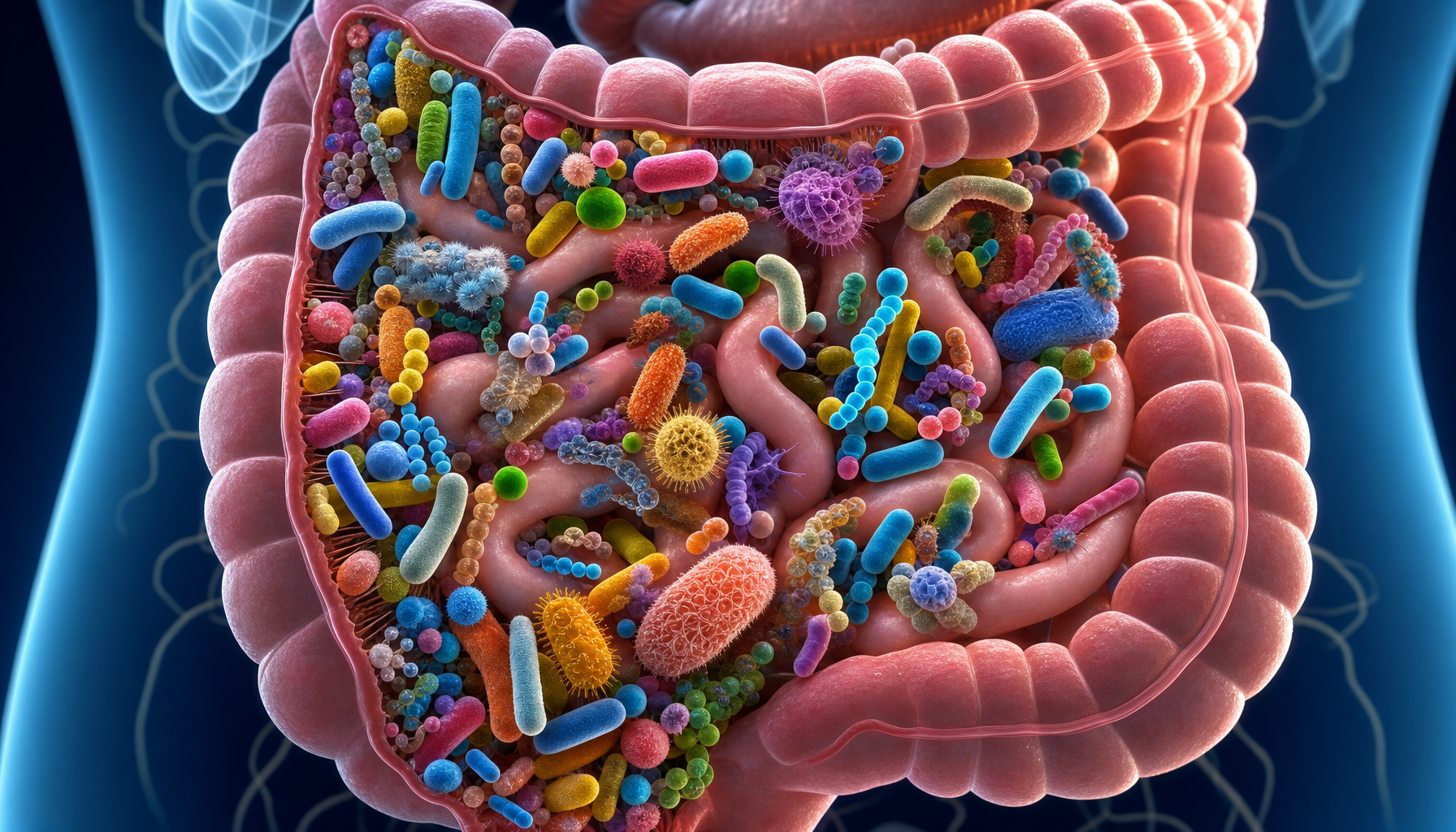
Gut Microbiome Therapy Approved: Fecal Microbiota Transplantation Enters the Precision Medicine Era
First standardized microbiome therapy receives FDA approval for C. difficile infection and inflammatory bowel disease
Gut microbiome therapy has reached a historic turning point in 2025-2026 — transitioning from academic research to clinical routine, evolving from the crude "fecal transplantation" approach to standardized "precision microbial formulation" pharmaceuticals.
Milestone Events
In 2023, the FDA approved the first fecal microbiota product, Rebyota (Ferring Pharmaceuticals), for the prevention of recurrent Clostridioides difficile infection (CDI). Since then, multiple precision microbiome therapies have achieved breakthrough progress.
Key Approvals and Data in 2025:
- VOWST (Seres Therapeutics): Oral standardized microbiome spore preparation; the Phase 3 trial (ECOSPOR IV) showed a recurrence rate of only 12% after a single course, compared to 30-35% with standard antibiotic therapy. Received FDA approval in 2025 for CDI patients aged 18 and above
- CP101 (Finch Therapeutics / Salix): Oral capsule fecal preparation; met primary endpoints in the PRISM3 Phase 3 trial, with 16-week recurrence rates of 15% vs. 41% in the placebo group
- RBX2660 (Rebyota upgrade): Ferring's second-generation formulation adds commensal bacterial strains (Faecalibacterium prausnitzii and Akkermansia muciniphila) specifically designed for inflammatory bowel disease (IBD)
Breakthroughs in IBD
Progress in microbiome therapy for IBD is equally noteworthy:
- Vedanta Biosciences' VE202, composed of 8 well-defined Clostridium strains, showed a clinical remission rate of 38% in the treatment group (vs. 12% placebo, p < 0.01) in a Phase 2 ulcerative colitis trial
- Pendulum Therapeutics' Pendulum Glucose Control (Akkermansia probiotic) improved abdominal pain scores and gut permeability markers in randomized controlled trials in IBS patients
- The FMT-DIET study based on fecal microbiota transplantation found that CDI patients showed significantly improved clinical response rates to a high-fiber diet after restoring gut microbiota
Technology Evolution
| Era | Product Form | Advantages | Disadvantages |
|---|---|---|---|
| First Generation (2013-2022) | Allogeneic fecal transplant | Full spectrum | Standardization difficult, infection risk |
| Second Generation (2023-2024) | Standardized fecal capsules | More convenient, standardized | Composition still has batch variability |
| Third Generation (2025+) | Defined microbial formulations | Fully controllable, batch-consistent | Lower microbial diversity than full fecal transplant |
Market Size and Outlook
The microbiome therapy market is projected to grow from $1.8 billion in 2025 to $8.5 billion by 2032. CDI is the first successful indication, but future explosive growth points lie in: IBD, IBS, metabolic diseases (diabetes, obesity), immuno-oncology (microbiome modulation of immune checkpoint inhibitor efficacy), and neuropsychiatric disorders (gut-brain axis modulation).
Challenges
Despite multiple FDA-approved products, microbiome therapy still faces: insufficient long-term safety data (the potential long-term effects of microbial community reconstruction are unclear), significant variability in efficacy across patients (influence of host microbiome baseline status), and globally inconsistent regulatory classification (the European EMA still mostly classifies these as tissue transplants rather than pharmaceuticals).
As single-strain defined formulations and live biotherapeutic products (LBPs) mature, gut microbiome therapy is evolving from "dark cuisine" into a formal member of precision medicine.
POC.HK Future Technology Observatory — Independent Technology Watch Report