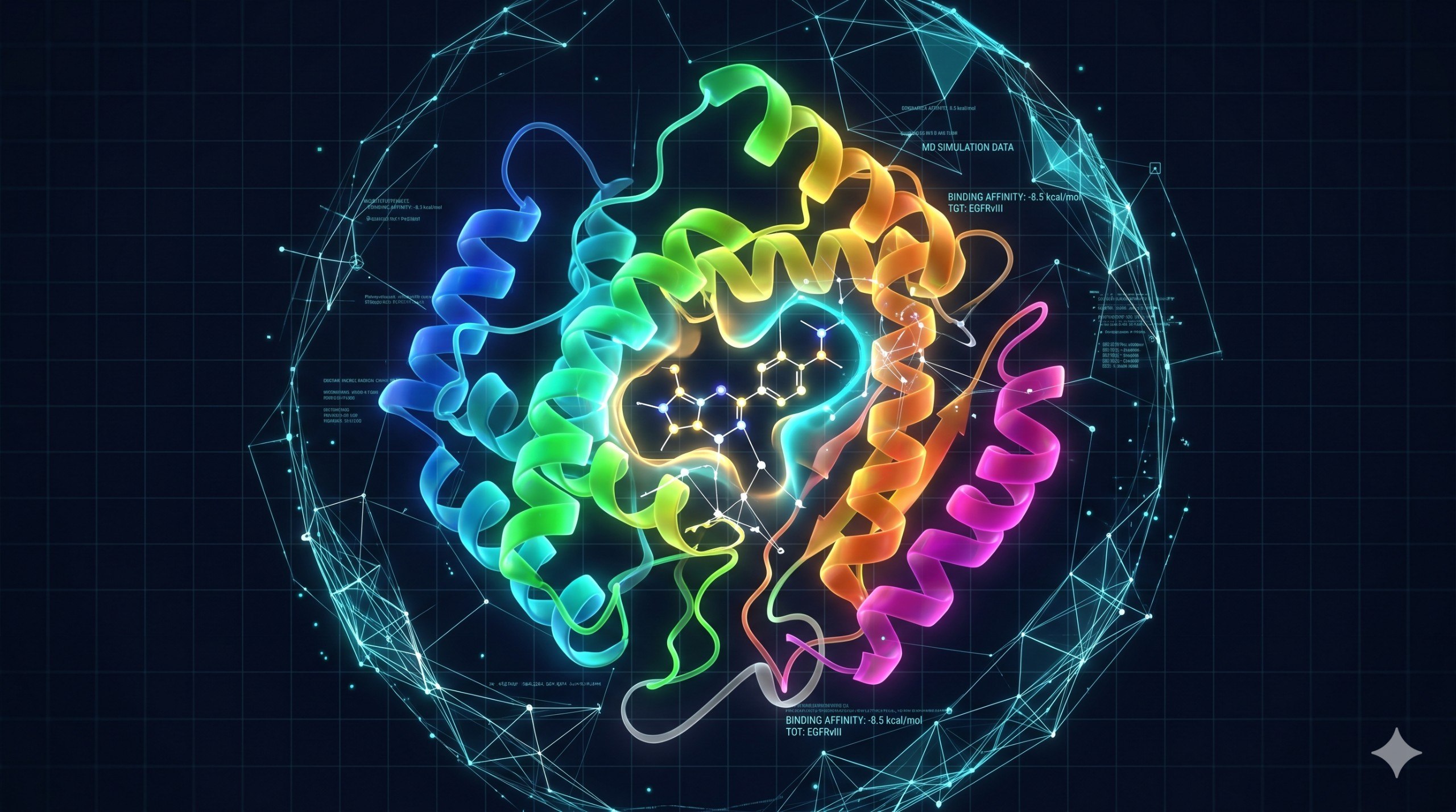
In 2026, a cancer treatment drug designed entirely by AI from scratch is entering Phase 1 clinical trials. This is not a story about an assistive screening tool or a molecular prediction model—it is about AI functioning as a genuine "drug designer," autonomously completing the entire pipeline from target identification to molecular generation. The company behind it, Isomorphic Labs, is a spinout of Google DeepMind, and its technological engine originates from AlphaFold, the 2024 Nobel Prize-winning breakthrough.
The significance of this milestone extends beyond a routine clinical trial announcement. If successful, it will demonstrate that AI can not only predict protein structures that already exist in nature but can create molecules that have never existed—targeting specific disease targets with the computer as the starting point rather than the test tube, achieving genuinely "rational drug design." This could be the biggest paradigm shift in the pharmaceutical industry since high-throughput screening.
From AlphaFold to IsoDDE: From Prediction to Design
Isomorphic Labs' core technology platform is called IsoDDE (Isomorphic Drug Design Engine). It builds on AlphaFold's protein structure prediction capability but extends far beyond "prediction."
The critical distinction is that "predicting protein structures" and "designing drug molecules" are fundamentally different problems:
-
AlphaFold solves prediction: Given an amino acid sequence, predict its 3D folded structure. This is reverse engineering—nature has already created the protein, and AI learns to read its design.
-
IsoDDE solves design: Given a disease-related protein target, design a small-molecule drug that precisely binds to that target and modulates its function. This is forward engineering—the molecule does not exist in nature, and AI must create it from scratch.
IsoDDE's architecture integrates three core layers:
-
Structural biology layer: Uses AlphaFold 3 to predict the target protein and its interactions with candidate molecules. AlphaFold 3's key breakthrough is predicting not just the protein itself but its interactions with ligands (small-molecule drugs), DNA, and RNA, achieving at least 50% improvement in accuracy over previous methods.
-
Generative chemistry layer: Uses diffusion models—similar to how DALL-E and Stable Diffusion generate images—to generate molecular structures in chemical space that satisfy target binding requirements. This fundamentally differs from "screening millions of candidate molecules": AI directly generates the most promising molecules rather than selecting from a large library.
-
Optimization and prediction layer: Applies AI prediction of drugability, toxicity, and metabolic stability to filter out likely-failing candidates before laboratory synthesis.
Observatory Analysis: When AI Transitions from Understanding Nature to Creating Nature
When AlphaFold solved the protein folding problem in 2020, the industry widely regarded it as a scientific discovery tool. Isomorphic Labs' clinical trial marks a deeper transition: AI is shifting from "a tool for understanding nature" to "a tool for creating nature."
This distinction is crucial. Understanding nature—predicting protein structures, decoding genome sequences—decodes information that already exists. Creating nature—designing new proteins, synthesizing new drug molecules—generates information that has never existed. The former is analysis; the latter is synthesis.
From a broader perspective, this analytical-to-synthetic transition is occurring simultaneously across multiple scientific domains:
- Materials science: AI generates novel crystal structures with specific thermodynamic, electrical, or mechanical properties
- Synthetic biology: AI designs artificial gene circuits and metabolic pathways with specific functions
- Climate technology: AI predicts and designs novel catalysts for carbon capture and conversion
- Energy storage: AI searches the chemical space for new electrolytes and electrode materials
The common thread: traditional "trial-and-error experimentation" costs are becoming unsustainable, and the AI paradigm of "computational generation plus selective experimental validation" is becoming the new standard.
For Isomorphic Labs, Phase 1 is just the beginning. The true test lies ahead: whether AI-designed drugs can demonstrate sufficient efficacy and safety in Phase 2 and Phase 3 trials. The answer to this question will profoundly influence pharmaceutical investment direction, R&D strategy, and regulatory frameworks for years to come.
2026: 173 AI-Assisted Drug Programs in Clinical Development
Isomorphic Labs' clinical trial is not an isolated event. As of mid-2026, a total of 173 AI-assisted or AI-designed drug programs are in clinical development worldwide—from proof-of-concept to late-stage trials—more than tripling from under 50 just two years ago. AI drug discovery is undergoing a genuine inflection from "academic curiosity" to "industrial reality."
Key milestones across the field:
| Milestone | Company | Year | Significance |
|---|---|---|---|
| AI-designed drug enters Phase 1 | Isomorphic Labs | 2026 | First AlphaFold-derived clinical candidate |
| Melanoma mRNA cancer vaccine | Moderna/Merck | 2025-2026 | AI-optimized antigen selection, Phase 3 shows 65% risk reduction |
| ILMA (AI-generated drug) | Insilico Medicine | 2025 | First AI-discovered fibrosis drug enters Phase 2 |
| AlphaFold 3 release | Google DeepMind | 2024 | Predicts all life molecule interactions |
| 173 AI clinical programs | Global aggregate | 2026 | 3x growth from 2024 |
The 173 programs span oncology, neuroscience, infectious disease, and rare conditions. However, AI's role remains concentrated in early-stage discovery—target identification and lead optimization—rather than end-to-end drug development automation. Isomorphic Labs' program is significant precisely because it attempts to extend AI's involvement across the entire design pipeline.
Computational vs. Experimental Cost Rebalancing
The economic logic of AI drug discovery is rooted in a simple fact: the cost structure of drug development is fundamentally changing.
Traditional drug discovery relies on high-throughput screening (HTS)—testing millions of compounds to find which bind the target. This requires vast laboratory infrastructure, chemical reagents, and months of time. A typical HTS campaign costs $10-20 million, and over 90% of hits are ultimately discarded.
AI methods—especially generative models—fundamentally reverse this sequence. Instead of passively screening existing molecules, the computer actively generates novel molecules that exist only in computational chemical space. This means:
- Chemical space explored expands from millions to billions of molecules
- Timeline from data generation to prediction compresses from months to days
- In lead optimization, the ratio of experimental validation improves from 0.1% to 10%
Isomorphic Labs claims its IsoDDE platform can compress the target-to-candidate cycle from the traditional 4-6 years to 12-18 months. If validated at scale, this will fundamentally reshape pharmaceutical R&D economics.
Current Limitations
Progress must be weighed against significant challenges:
Data quality ceiling. AI model performance depends directly on training data quality and quantity. High-quality drug discovery data—particularly clinical trial results—is often held by large pharmaceutical companies and not publicly available. The scale, consistency, and annotation quality of public datasets remain critical constraints on model advancement.
Explainability. Even when AI generates a seemingly perfect molecule, scientists often struggle to understand "why this molecule works." In the regulatory approval context, agencies need not just clinical data but a plausible mechanism of action. AI-generated molecules without clear biological rationale may face more complex approval pathways.
Clinical time compression limits. AI can accelerate early drug discovery, but the clinical trial timeline itself—Phase 1 through Phase 3 typically takes 7-10 years—is largely incompressible. AI can fill pipelines with more candidates but cannot speed up long-term patient follow-up. The full impact of AI on overall drug development timelines will require more than a decade to manifest.
Disclaimer: This article is for informational purposes only and does not constitute investment advice or business decisions. Data and time-sensitive information are current as of the publication date and may change. Neither the author nor POC.HK assumes any liability for losses arising from the use of this information.