Hypersonic Defense: The Dynamic Balance Between Spear and Shield
Hypersonic missiles — weapons flying at speeds exceeding Mach 5 while maneuvering within the dense atmosphere — are considered the most disruptive offensive weapons since ballistic missiles. Their unpredictable flight trajectories render traditional missile defense systems (such as Patriot and THAAD) nearly completely ineffective. In 2026, hypersonic defense technology is undergoing a comprehensive revolution from sensors to interceptors.
The Nature of the Threat
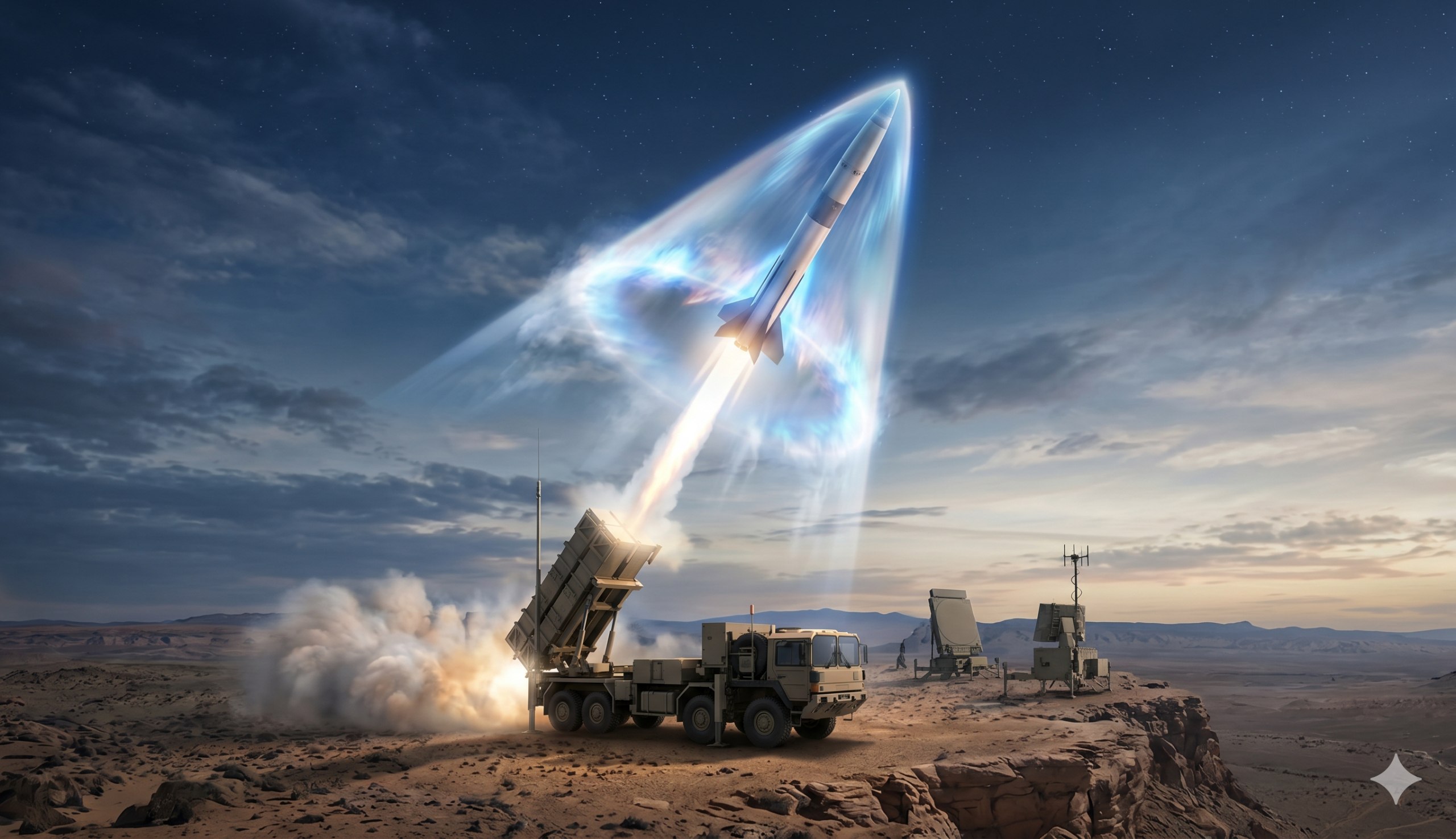
The difficulty of defending against hypersonic missiles stems from threecompoundingfactors. First is speed: at speeds exceeding Mach 5 (approximately 1.7 km/s), the decision time window from detection to interception point shrinks from approximately 10 to 20 minutes for ballistic missiles to 2 to 5 minutes. Second is maneuverability: unlike ballistic missiles' fixed parabolic trajectories, hypersonic glide vehicles (HGVs) can execute large lateral maneuvers within the atmosphere, making interception point prediction extremely difficult. Third is plasma shielding: the plasma sheath generated by aerodynamic heating around hypersonic vehicles absorbs or refracts radar and radio signals, causing communications blackouts and detection difficulties.
Current globally deployed or near-deployed hypersonic weapon systems include: Russia's Zircon (3M22) anti-ship hypersonic missile (claimed speed of Mach 8 to 9), China's DF-17 (carrying the DF-ZF glide vehicle, speed approximately Mach 5 to 10), and the U.S. LRHW "Dark Eagle" (speed above Mach 5) and ARRW air-launched rapid response weapon. North Korea also test-launched a self-described "Hwasong-8B" hypersonic glide vehicle in 2025.
Revolution in Detection
In hypersonic defense, detection is more challenging than interception. Due to the plasma shielding effect, traditional X-band radars (such as THAAD radar) may have their effective detection range against hypersonic targets reduced to 30% to 50% of normal.
Space-based infrared sensors are the most promising current detectionmethod. Hypersonic vehicles flying at high speed within the atmosphere generate intense infrared radiation (surface temperatures reaching 1,000°C to 2,000°C), making them ideal targets for infrared monitoring. The U.S. Space Development Agency's (SDA) Proliferated Warfighter Space Architecture (PWSA) plans to deploy a low-Earth-orbit infrared monitoring constellation of approximately 200 tracking-layer satellites by 2028. The first 8 satellites were launched in 2025, with actual test data showing infrared detection range against hypersonic targets exceeding 1,000 km, with detection sensitivity approximately 10 times greater than existing SBIRS satellites.
China is also deploying similar capabilities. The first satellites of the "Space-Based Infrared System" launched in 2025 (reportedly the "Huiyan" series) are analyzed by outside experts as potentially having hypersonic target tracking capability.
Low-frequency radar (VHF/UHF band) represents another means ofpenetratingplasma shielding. Since plasma attenuation is lower for low-frequency electromagnetic waves, VHF radar may penetrate the sheath to detect the high-speed vehicle inside. Raytheon is developing a VHF active electronically scanned array radar called the "Penetrator," designed to detect hypersonic targets at a range of 300 km.
Interception Solutions
For mid-course interception, Glide Phase Interceptor (GPI) is the Missile Defense Agency's (MDA) priority program. GPI plans to deploy an air-to-air interceptor missile launched from F-35 or F-15EX fighter jets around 2028, specifically designed for "hit-to-kill" interception during the target's glide phase (before atmospheric reentry). A 2025 flight test successfully intercepted a sounding rocket simulating a glide target at 60 km altitude — although the target had limited maneuverability, it validated the basic feasibility of terminal guidance algorithms.
For terminal interception, directed energy weapons offer another possibility. High-energy lasers can reach targets nearly instantaneously, eliminating the need to predict interception points. However, current laser weapon power levels (50kW to 150kW) can only handlelow-speeddrones and small rockets; countering high-speed, heat-resistant hypersonic targets requires megawatt-class (1MW+) laser systems — not achievable in the foreseeable future.
Competitive Landscape and Strategic Consequences
The hypersonic offense-defense arms race is reshaping global strategic balance. The race to advance hypersonic weapons and defense systems is inherently unstable — technology-driven, opaque, and lacking effective arms control frameworks.
Russia and China view hypersonic weapons as an "asymmetric response" toshatterU.S. missile defense advantages, while the U.S. sees hypersonic defense as necessary to maintain the credibility of its deterrence architecture. This mutually reinforcing security dilemma is driving all nations to continuously increase investment in this field — according to IISS data, global hypersonic-related R&D expenditure was approximately $9 billion in 2025, projected to grow to $14 billion by 2028.
Future Outlook
Over the next five years, the most critical milestones in hypersonic defense are the full deployment of the SDA tracking layer satellite constellation (2028) and the first operational test of GPI (2029). If these systems come online as scheduled, a preliminary "detection-tracking-interception" chain against hypersonic targets will be established.
However, based on historical experience, the spear always develops faster than the shield. In the foreseeable future, hypersonic weapons will continue to maintain an advantage over defense systems. True balance may come from the dynamic interplay of offense and defense technologies — rather than either side achieving decisive superiority.
Disclaimer: This article is written by POC.HK Future Technology Observatory based on publicly available information and independent analysis.