On June 12, 2026, Shenzhen-based humanoid robot startup EngineAI filed a confidential IPO application with the Hong Kong Stock Exchange, underwritten by China International Capital Corporation and CITIC Securities. While the news briefly lit up Bloomberg terminals, the truly noteworthy phenomenon is not any single company's IPO filing but the structural shift unfolding behind it: China's humanoid robot industry is rushing toward public markets at unprecedented speed.
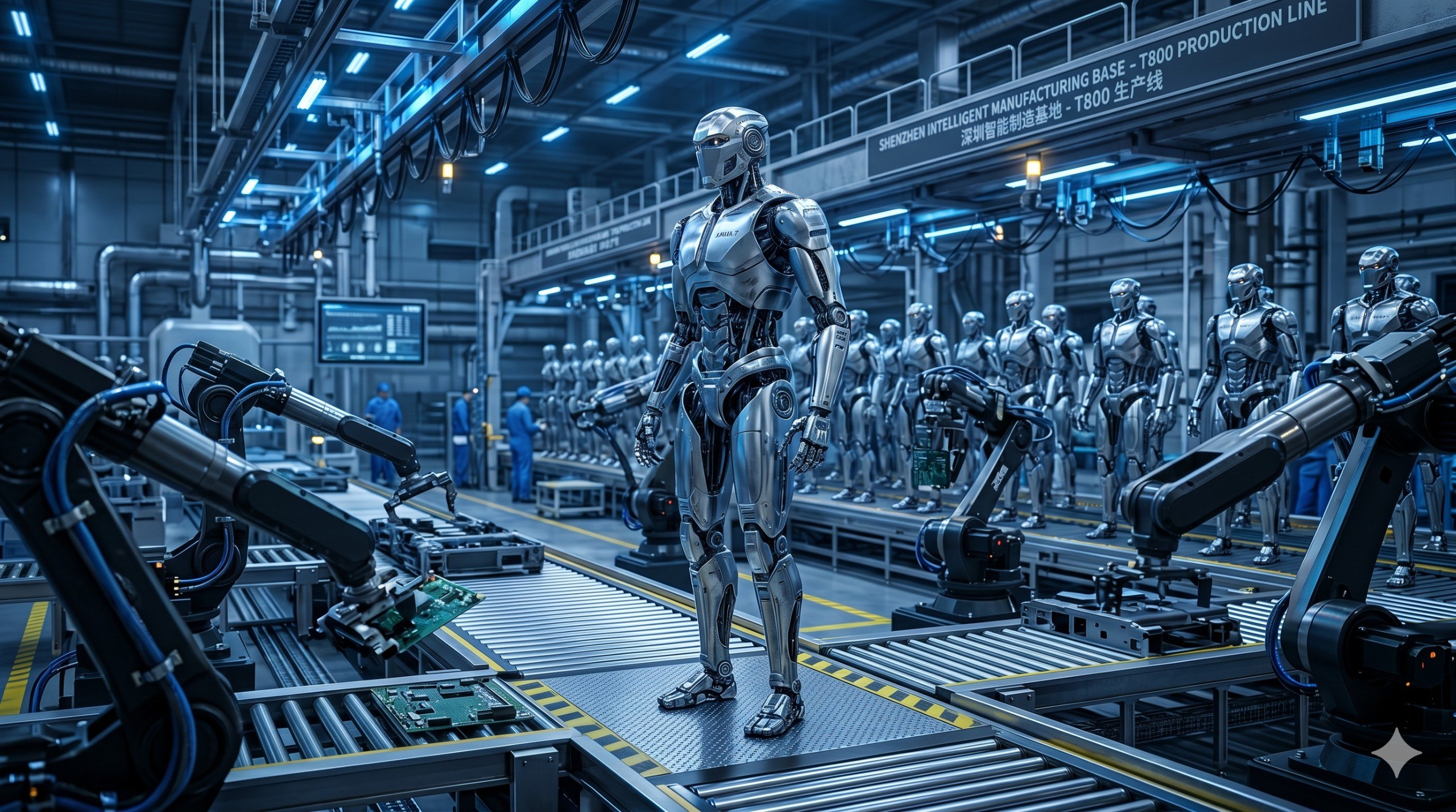
Just eleven days before the filing—on June 1—EngineAI opened a 12,000-square-meter production facility in Shenzhen's Longhua District and began shipping its flagship T800 humanoid robot. The factory is designed to produce one robot every 15 minutes, targeting an annual capacity of 10,000 units. Founded only in 2023, the company has crossed the gap from lab prototype to mass-production factory in just three years, reaching a valuation exceeding RMB 10 billion (approximately $1.5 billion).
Yet the production numbers stand in stark contrast to downstream demand realities. Industry data shows that China shipped approximately 90% of the world's humanoid robots last year, but only 23% of buyers reported satisfaction with available products. This satisfaction gap reveals a deep structural contradiction: manufacturing capacity on the supply side is expanding faster than ever, while actual application value on the demand side remains unverified.
The China Humanoid Robot IPO Wave
EngineAI's IPO filing is not an isolated event. It is part of a rapidly accelerating wave of humanoid robot companies seeking public listings:
- Hangzhou-based Unitree Robotics—the world's largest shipper of humanoid and quadruped robots—is preparing for a Shanghai STAR Market listing with a target valuation of approximately $7 billion
- DEEP Robotics, also based in Hangzhou, is seeking a STAR Market listing
- Shenzhen's Leju Robotics has begun mass-producing its flagship Kuavo humanoid at a factory operated with Dongfeng Precision
- Shanghai's Agibot plans to manufacture at least 20,000 humanoids in 2026
- Beijing's Galbot, known for its unmanned retail stores, is also preparing for listing
- Shenzhen's PUDU Robotics, a leading mobile robot manufacturer, is expanding into industrial automation
- BYD-backed hand manufacturer PaXini and Linkerbot are also pursuing concurrent listings
Hong Kong's IPO market has already raised $22.6 billion this year, with technology companies accounting for a rising share. More than 150 robotics-related companies are competing for the same pool of public-market capital. This listing wave itself is the ultimate stress test of the industry's maturity.
EngineAI T800: A Hardware Deep Dive
The T800 is EngineAI's flagship product, positioned as a general-purpose industrial humanoid robot:
| Specification | Value | Industry Context |
|---|---|---|
| Height | 173 cm | Close to average adult male |
| Weight | 75 kg | Comparable to average adult |
| Degrees of Freedom | 29 | Industry mainstream |
| Peak Joint Torque | 450 Nm | Exceeds 90% of adult males |
| Peak Power Output | 14,000 W | Industrial-grade |
| Per-hand Payload | ~5 kg | Below some competitors |
| Battery | Solid-state | ~4 hours heavy-duty operation |
| Compute Platform | NVIDIA Jetson Thor (2000 TOPS) | Industry-leading edge AI |
| Sensors | Intel RealSense D415/D435i + AC1 | Multi-modal perception |
| Materials | Magnesium-aluminum exoskeleton | Strength + lightweight |
| Joint Modules | Fully proprietary integrated joints | Vertical integration |
| Price | $25,000 | Competitive for industrial-class |
The T800 takes its name from the iconic synthetic human in the Terminator franchise—EngineAI founder Zhao Tongyang has cited it as one of his biggest inspirations growing up. The robot has gained viral attention through multiple video demonstrations: a powerful kick knocking its creator to the ground, patrolling Shenzhen streets alongside police, and continuing to fight in a cage match after its head was knocked off.
Impressive as these hardware demonstrations are, the T800's fine manipulation capabilities remain limited. Its per-hand payload of approximately 5 kg lags behind competitors such as Figure 03's 20 kg-class capability. This reflects the industry-wide engineering trade-off between full-body strength and hand dexterity.
The 23% Satisfaction Gap: Capacity vs. Value
The 23% buyer satisfaction rate is the most uncomfortable number in the humanoid robot industry. It reveals a harsh reality: despite manufacturers' ability to produce robots at unprecedented speed, actual workplace performance falls far short of expectations.
Three core factors drive this gap:
First, the generality-versus-specificity paradox. Humanoids are marketed as "general-purpose labor replacement solutions," but in specific tasks they often underperform dedicated automation. A welding robot on an automotive assembly line is more efficient, more reliable, and cheaper than a humanoid.
Second, lagging software ecosystems. Hardware advances far outpace software and AI capabilities. Despite rapid progress on platforms like NVIDIA Isaac and various foundation models, enabling robots to autonomously complete complex multi-step tasks remains an unsolved challenge. Most deployments remain at the "teleoperated demonstration" or "highly controlled environment" stage.
Third, deployment cost economics. At $25,000 base price plus maintenance, programming, deployment infrastructure, and compliance costs, total ownership could range from $50,000 to $100,000. For many small and medium enterprises, the payback period remains unclear.
One Robot Every 15 Minutes: The Double-Edged Sword
EngineAI's Shenzhen factory epitomizes Chinese manufacturing efficiency. 12,000 square meters, one robot every 15 minutes, 10,000 units per year—these numbers command respect in any industry. But for a product category yet to prove large-scale market demand, this pace of capacity expansion carries significant risk.
China's manufacturing logic is "build capacity first, find the market later." This strategy succeeded in solar panels, electric vehicles, and batteries—driving down costs through scale effects until markets were created. But humanoid robots differ fundamentally: their core value comes not from hardware alone but from software and AI capability. A cheap robot that cannot autonomously perform useful work is merely a pile of metal and motors.
Unitree pursues an alternative strategy: extreme vertical integration to drive down prices. The company claims over 90% of core components are made in-house, allowing it to price its R1 humanoid at an astonishing $4,000. This "DJI model"—volume wins, price breaks markets—proved effective in consumer drones, but industrial humanoid purchasing decisions are far more complex.
Observatory Analysis: Three Divergent Paths
The humanoid robot industry is approaching an inevitable moment of divergence. Synthesizing EngineAI's IPO filing with broader industry dynamics, POC.HK identifies three likely dominant paths:
Path One: Industrial Specialization. Represented by Figure and Boston Dynamics, focusing on narrow application scenarios in warehousing, logistics, and manufacturing. These companies do not pursue "general-purpose humanoids" but instead optimize robots for specific tasks to the highest level. This strategy carries the lowest risk but may have a smaller market ceiling than anticipated.
Path Two: Consumer Democratization. Represented by Unitree's $4,000 R1, attempting to open mass markets through ultra-low pricing. This strategy requires maturity in consumer applications—home assistance, education, entertainment—that remain at very early stages.
Path Three: Platform Ecosystem. Represented by NEURA Robotics' Neuraverse, integrating robots, AI, sensors, and edge computing into a unified platform that creates ecosystem value through skill marketplaces and data sharing. This path has the greatest potential but also the highest execution difficulty.
For investors and industry observers, the second half of 2026 through 2027 will be the critical observation window. Companies that can demonstrate real customer value and positive unit economics beyond the "capacity narrative" will truly emerge from this listing wave.
Disclaimer: This article is for informational purposes only and does not constitute investment advice or business decisions. Data and time-sensitive information are current as of the publication date and may change. Neither the author nor POC.HK assumes any liability for losses arising from the use of this information.