Prime Editing Enters Human Clinical Trials: The Precision Revolution in Gene Editing
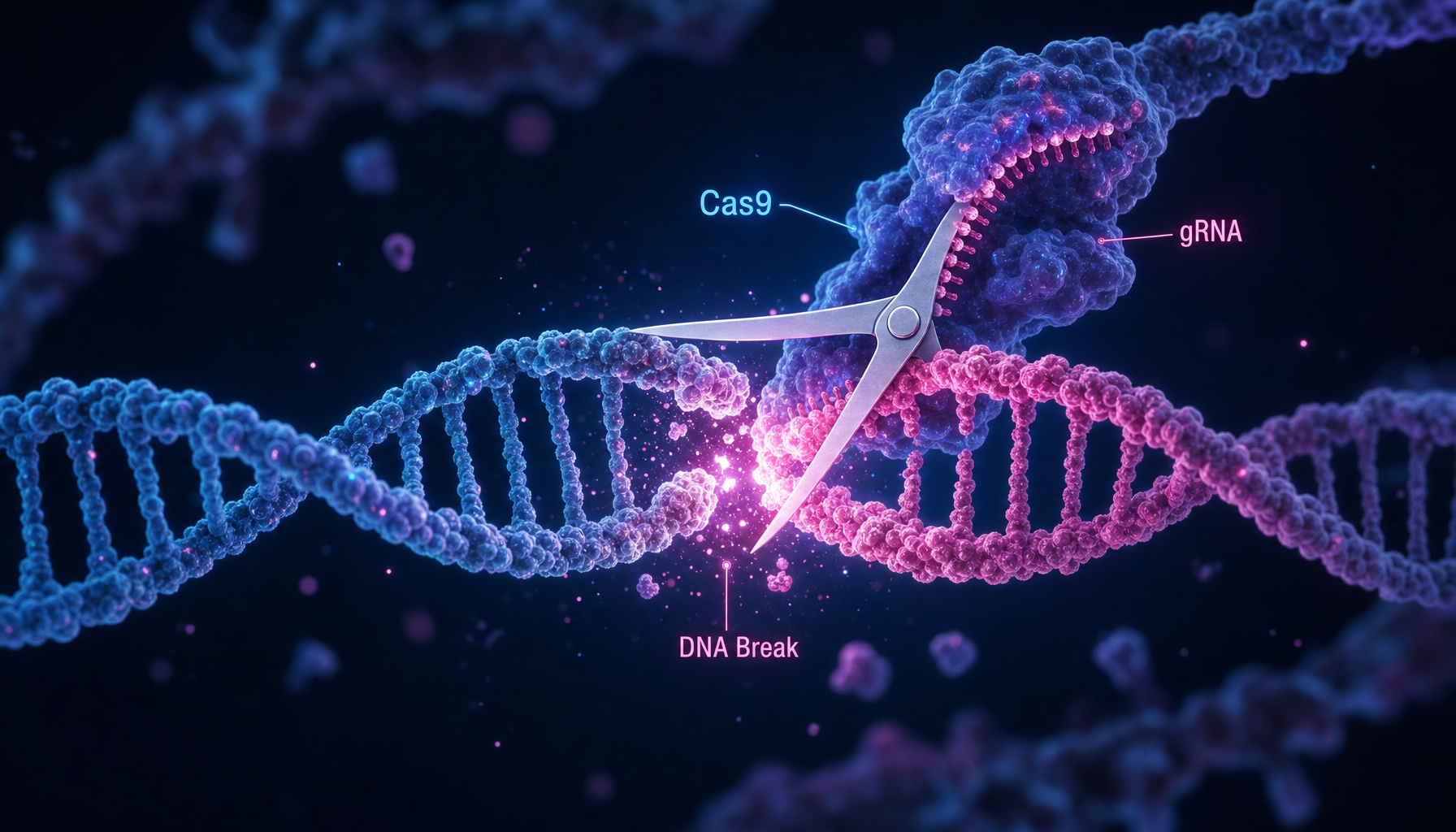
If CRISPR-Cas9 is the "scissors" of gene editing, then Prime Editing is a "search-and-replace" gene word processor. First described in 2019 by Harvard's David Liu team, this technology has finally entered human clinical trials in 2025 — the FDA approved the first Prime Editing clinical trial for β-thalassemia.
The fundamental difference between Prime Editing and traditional CRISPR is that it does not rely on DNA double-strand breaks. Cas9 must cut both strands of DNA to perform editing, triggering the cell's NHEJ repair mechanism and producing unpredictable insertions or deletions. Prime Editing uses a "nickase-Cas9" fused with reverse transcriptase, creating a nick on only one strand of the target DNA, then using a Prime Editing Guide RNA (pegRNA) as a template to directly write the corrected sequence.
The result of this mechanism is significantly reduced off-target effects. In vitro and animal model studies show that Prime Editing has off-target editing rates 10-100 times lower than Cas9. Furthermore, Prime Editing supports more precise types of edits — it can not only perform the gene knockouts that Cas9 excels at, but also base substitutions, small fragment insertions and deletions, covering approximately 89% of human pathogenic gene mutation types.
β-thalassemia is an ideal first target for Prime Editing's clinical debut — as a blood disorder, edited hematopoietic stem cells can be infused back into the patient, with the delivery pathway already validated by Casgevy (the first CRISPR therapy). The results of this trial will establish a regulatory precedent for Prime Editing's expansion into other indications such as liver metabolic diseases and neurodegenerative disorders.