The Era of AI Computer Control: How Claude Computer Use Rewrites the Rules of Human-Computer Interaction
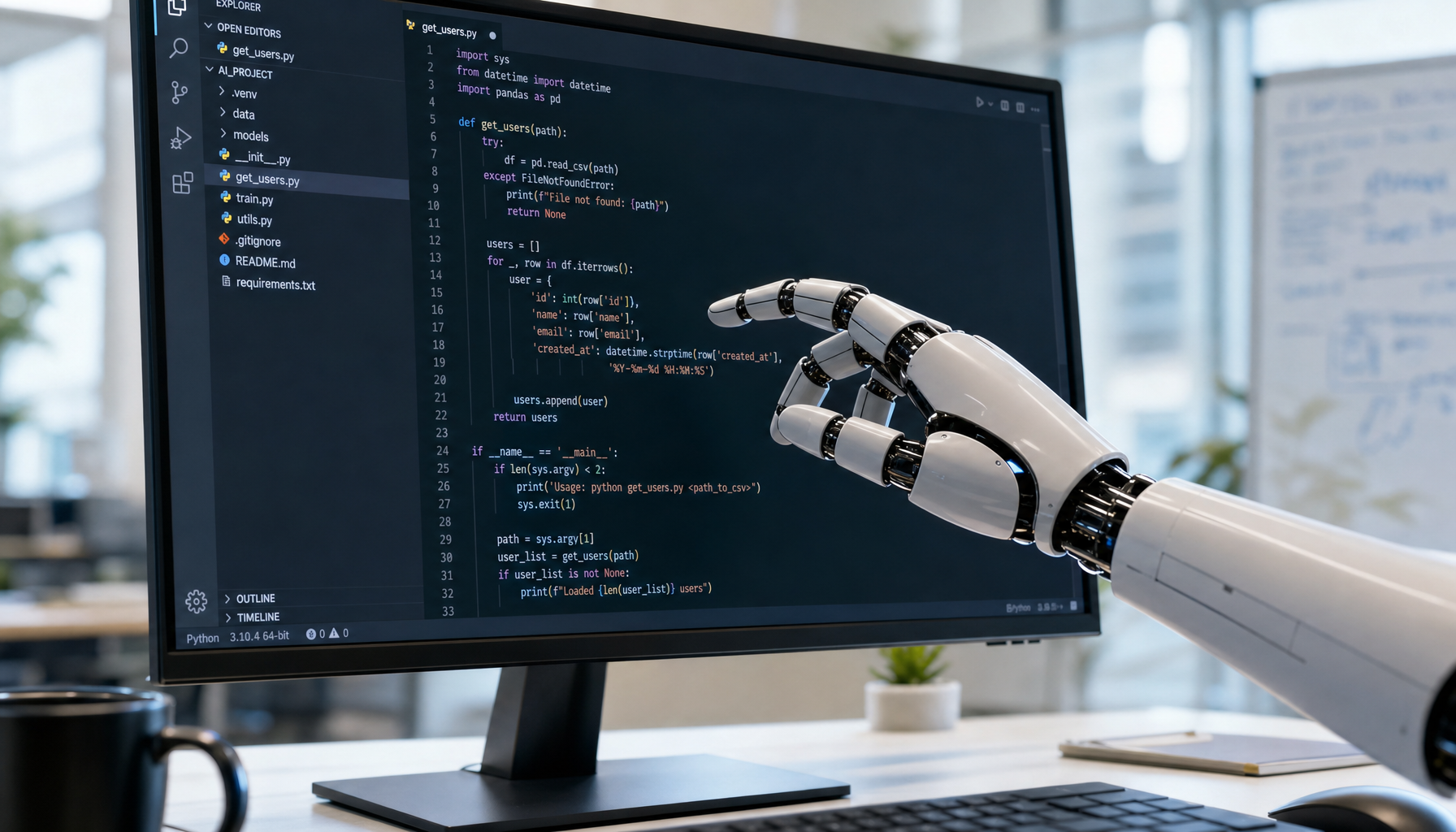
In October 2024, Anthropic introduced an experimental feature called "Computer Use" in Claude 3.5 Sonnet, allowing AI to "see" a screen and "operate" a computer just like a human for the first time. This is not a simple API bridge or script automation — Claude receives screenshots as visual input and outputs low-level operation commands such as mouse movement, clicks, scrolling, and keyboard input, controlling the computer interface in a fully end-to-end manner. This marks a qualitative leap from "language understanding" to "environment manipulation."
Observatory Analysis
The innovation in technical architecture lies in integrating visual understanding and action generation into a unified policy network. Traditional Robotic Process Automation (RPA) relies on pre-programmed rules and fixed UI element identifiers, failing when layouts change. Claude Computer Use directly understands the semantics in screen pixels through a vision-language model — it can "see" the shape and text of a button, understand its function, and then precisely calculate the pixel coordinates for mouse movement.
Anthropic's published evaluation data shows: on the OSWorld benchmark (requiring AI to complete 50 real computer operation tasks), Claude Computer Use achieved a 38.1% completion rate, compared to just 22% for previous state-of-the-art methods (based on traditional VLM pixel understanding). While 38% is still far from human-level performance (70-75%), this was achieved with no training data — only through few-shot prompting — making its generalization capability surprising.
Real-world application cases are emerging rapidly. Software testing company Functionize uses Computer Use for regression testing, reducing test case writing time from 4 hours to 20 minutes. Data integration platform Zapier tested Computer Use for complex workflows spanning 10 applications — reading attachments from Gmail, extracting data, populating Google Sheets, and sending reports in Slack — all without any API integration.
Safety is the dimension Anthropic has handled most carefully. Computer Use is designed to require explicit user authorization for every operation, and the model automatically pauses for human confirmation on sensitive actions (such as login credential entry, payment confirmation). Anthropic has also introduced a "harm classifier" to monitor AI behavior patterns, preventing the model from being used for malicious purposes — such as automatically filling phishing forms or unauthorized data theft.
Looking Ahead
The deeper significance of Computer Use extends beyond the feature itself. It represents theprototype of an entirely new "computing paradigm": the transition from Graphical User Interface (GUI) to Natural Language User Interface (LUI).
Short-term impact (1-2 years) will concentrate on enterprise automation. Any repetitive workflow based on web or desktop applications — data entry, system migration, report generation, cross-system data synchronization — may be replaced by Computer Use-type AI. Forrester Research predicts that by 2027, AI-driven interface automation will replace 8-12% of approximately 300 million white-collar jobs worldwide.
Medium-term challenges (3-5 years) lie in reliability and speed. Currently, each Computer Use operation requires 2-5 seconds of inference time, and pixel-level click deviations occur occasionally. More importantly, when unexpected interface changes occur (such as pop-up ads, system update windows), the model's response is not yet robust enough.
Long-term profound impact involves redefining the design philosophy of computers. If AI can perfectly operate current GUIs, why do we still need GUIs? Future application interfaces may no longer need to be optimized for human visual and motor systems — they can be designed for AI's "perception-action" loop, shifting from icons and buttons to structured APIs and semantic interfaces. This will lead to a fundamental restructuring of the entire software ecosystem, from Mac/Windows to mobile applications.
Claude Computer Use is not just a new feature — it is a door to a new era of human-machine collaboration, where computers are no longer tools to be learned, but extensions of natural language.