Agricultural Automation: A Technology Revolution Driven by Labor Crisis
Global agriculture faces severe labor shortages. In the United States, the median age of agricultural workers has reached 58; in China, the younger generation is generally unwilling to farm. Automation is no longer an option but a necessary path to maintaining food production.
Current State of Technology: Coordinating Tractors and Drones
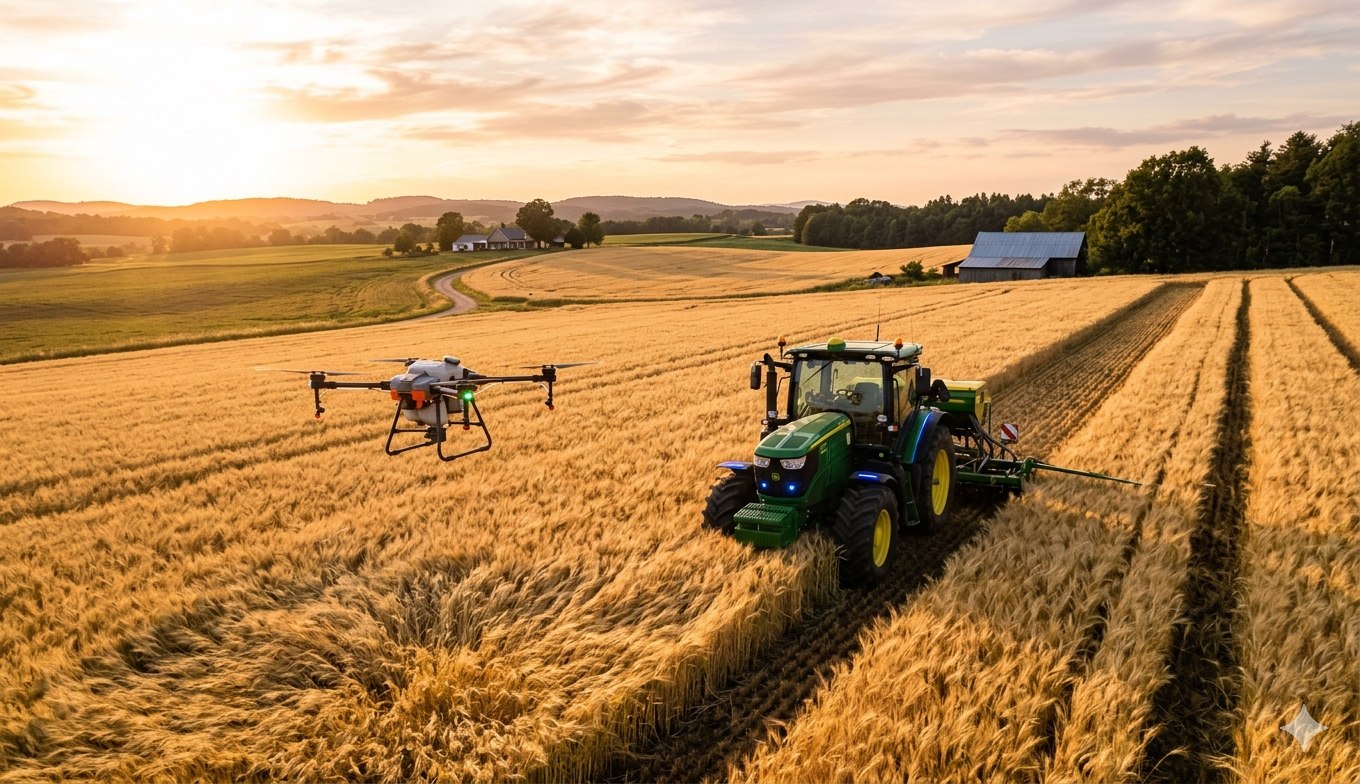
John Deere's fully automated tractors can autonomously perform tillage, seeding, and precision spraying. Their AI vision system can distinguish crops from weeds in real time, reducing herbicide use by 90% while increasing yields. Meanwhile, agricultural drones conduct multispectral crop health monitoring from the air, identifying early signs of pests and diseases, and coordinating with ground equipment for precision treatment. Additionally, automated irrigation systems coupled with soil sensors have improved water efficiency by over 40%.
Commercialization Barriers
The adoption of agricultural automation faces two major bottlenecks: first, the high upfront investment — a fully automated tractor costs over $500,000, an extremely heavy burden for small and medium-sized farms; second, technical adaptability — different crops and different terrains require different automation solutions, with a lack of versatility.
Outlook
We expect agricultural automation to advance along two paths: large farms will adopt fully automated heavy machinery path, while small and medium farms will rely on flexible combinations of small robots and drones. At the policy level, multiple governments have included agricultural automation in subsidy programs, and we expect the first fully unmanned commercial farms to appear before 2027.