Autonomous Delivery: The Robot Army for the Last Mile
The explosive growth of e-commerce and food delivery has made the "last mile" the most expensive segment of logistics — accounting for over 40% of total transportation costs. Autonomous delivery vehicles and robots are emerging as the core solution to this challenge.
Mainstream Solutions and Key Players
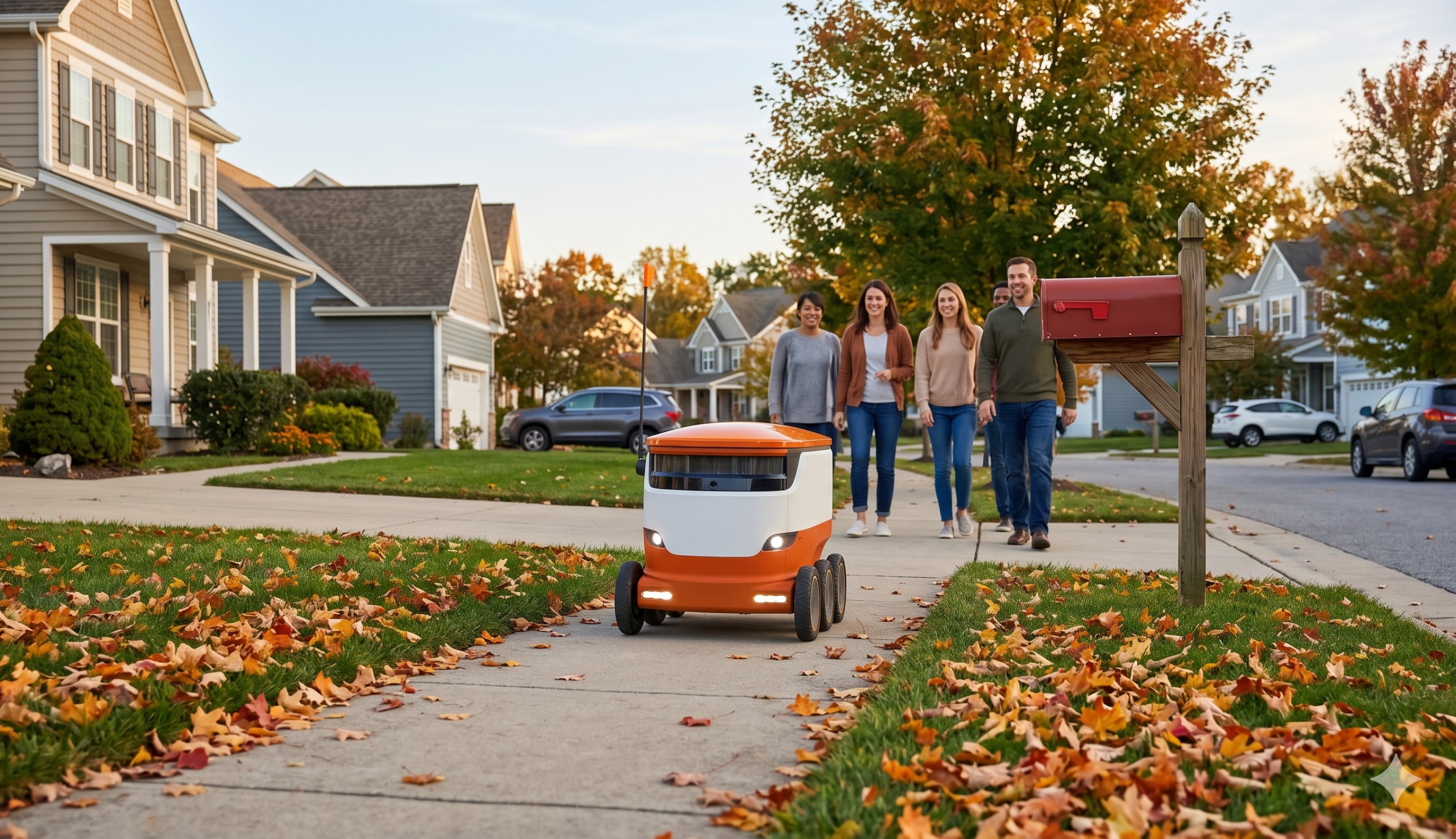
The autonomous delivery field currently features three parallel technology routes: Sidewalk robots (represented by Starship Technologies), which have completed over 10 million deliveries across 100+ campuses and cities worldwide — slower but with extremely low operating costs; Dedicated unmanned delivery vehicles (represented by Nuro and JD.com), which can travel on public roads at up to 40 km/h with larger cargo capacity; Drone delivery (represented by Amazon Prime Air and Wing), suitable for short-distance, time-sensitive instant delivery.
Regulatory Progress and Key Challenges
Multiple states and cities have passed autonomous delivery regulations, typically limiting speed (<25 mph), designating operating areas, and requiring remote monitoring. However, the industry still faces three major challenges: weather limitations (strong winds and heavy rain prevent drone and robot operations), social acceptance (conflicts between sidewalk robots and pedestrians sharing space), and cost-effectiveness — the per-delivery unit cost currently remains higher than human couriers.
Outlook
As battery range improves and sensor costs decline, autonomous delivery is expected to reach cost parity with traditional delivery between 2027 and 2028. Starship and Nuro are testing next-generation modular vehicles supporting cold chain and multi-compartment storage, preparing for full-category delivery from food to pharmaceuticals. The long-term goal is to achieve a fully automated logistics network combining "regional transfer + last-mile unmanned delivery."