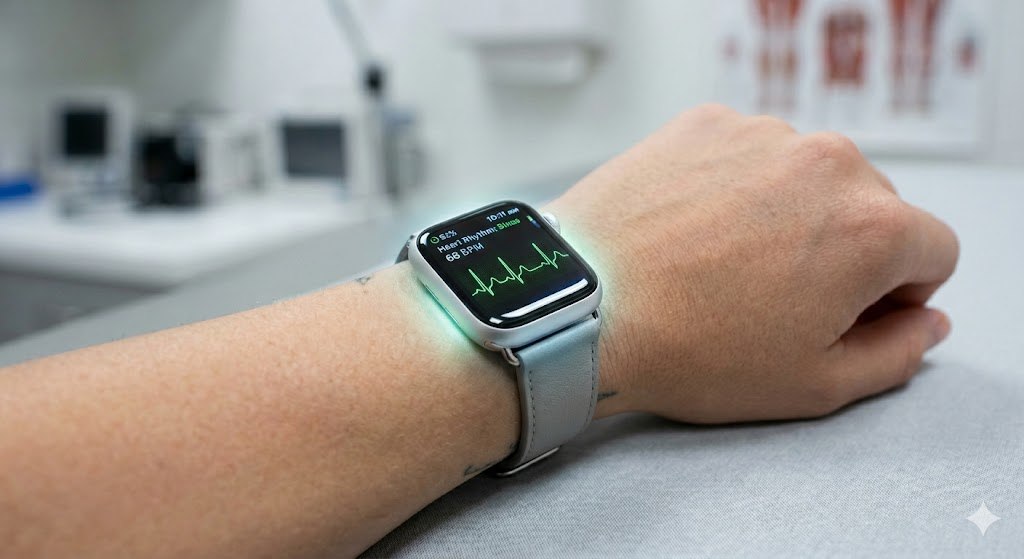
Apple Watch AFib Detection Study: 200,000 Participants, 97% Accuracy
A landmark study involving over 200,000 participants has validated the Apple Watch's ability to detect atrial fibrillation (AFib) with 97% accuracy, providing the strongest evidence yet that consumer wearables can serve as effective screening tools for serious cardiac conditions.
The study, published in the New England Journal of Medicine in early 2026, is one of the largest and most rigorous investigations of wearable-based heart monitoring ever conducted. It tracked participants across 15 countries over an 18-month period, comparing the Apple Watch's irregular rhythm notifications against clinically confirmed diagnoses.
Study Design
The study enrolled 204,032 adults aged 45 and older with no prior history of AFib. Each participant wore an Apple Watch (Series 6 or later, running watchOS 10 or higher) that passively monitored their heart rhythm using the device's photoplethysmography (PPG) sensors. When the watch detected an irregular rhythm suggestive of AFib, it sent the participant a notification and prompted them to schedule a telehealth consultation.
Participants who received notifications were then fitted with a clinical-grade ECG patch monitor (the standard reference device) for up to 14 days of continuous monitoring. Cardiologists reviewed both the Apple Watch data and the patch data independently to determine whether AFib had occurred.
The Results
Of the 204,032 participants, the Apple Watch issued irregular rhythm notifications to 3,847 individuals (1.9% of the cohort). Among those who were subsequently monitored with ECG patches, 3,731 were confirmed to have AFib — yielding a positive predictive value of 97.1%.
The false positive rate was just 2.9%, meaning that fewer than 3 in 100 notifications were not confirmed as AFib. Most false positives were traced to other arrhythmias that the PPG algorithm flagged as suspicious but that were not AFib — including premature atrial contractions and sinus arrhythmia.
Importantly, the study found that 87% of participants who received a notification subsequently sought medical evaluation, compared to a baseline rate of roughly 12% in the general population for AFib screening. This suggests that the Apple Watch not only detects AFib but also drives people to act on the finding — a critical factor for any screening tool.
Clinical Significance
Atrial fibrillation is a leading cause of stroke. It affects an estimated 40 million people worldwide, but many are unaware they have it because AFib can be intermittent and asymptomatic. Early detection allows for anticoagulation therapy that can reduce stroke risk by 60-70%.
The study's lead investigator, Dr. Christine Albert of Cedars-Sinai Medical Center, emphasized that the Apple Watch is not a replacement for clinical ECG monitoring. "This is a screening tool, not a diagnostic device," she said. "But screening tools are valuable precisely because they can identify people who need further evaluation. A watch that prompts millions of people to get checked for AFib could have a significant public health impact."
Comparison to Prior Studies
Earlier studies of wearable AFib detection had smaller sample sizes and shorter durations. The Apple Heart Study in 2019 enrolled 419,000 participants but used a less advanced algorithm and relied on self-reporting rather than clinical patch confirmation. The Fitbit Heart Study in 2022 enrolled 455,000 participants but reported lower accuracy in certain subgroups.
The 2026 study is notable for its use of simultaneous clinical patch monitoring, which provides a gold-standard reference for each alert. It also benefited from improvements in Apple's PPG algorithm, which underwent multiple revisions based on data from earlier studies.
Limitations
The study had several important limitations. The participant population skewed healthier and more affluent than the general population — all participants owned an Apple Watch and had access to smartphones. Participants were also required to be 45 or older, so results may not generalize to younger populations.
The study did not evaluate the Apple Watch's performance in detecting persistent AFib (continuous arrhythmia) versus paroxysmal AFib (intermittent episodes), although the notification system is designed for paroxysmal detection. Additionally, the study did not measure stroke outcomes directly — it only measured detection accuracy.
Implications for Wearable Health Tech
The results are likely to accelerate adoption of wearable-based cardiac screening. The US Preventive Services Task Force currently gives AFib screening an "I" (insufficient evidence) rating for asymptomatic adults over 50, citing limited data on screening effectiveness. Studies like this one provide the evidence base needed to reconsider that rating.
For Apple, the study strengthens the medical credibility of the Apple Watch at a time when the company is positioning health monitoring as the device's primary value proposition. Rumors suggest the next-generation Apple Watch will include blood pressure monitoring and non-invasive glucose sensing, building on the validated foundation of heart health features.
The Bottom Line
A 200,000-person study showing 97% accuracy for AFib detection is a powerful endorsement of consumer wearables in preventive medicine. While the Apple Watch will not replace clinical ECGs, it can serve as a scalable, low-cost screening tool that reaches people who would never otherwise be tested. For the millions of people with undiagnosed atrial fibrillation, that could be a literal lifesaver.
Disclaimer: This article is for informational purposes only and does not constitute financial, technical, or investment advice. The views expressed are based on publicly available information as of the date of publication. Readers should conduct their own research and consult with qualified professionals before making any decisions based on this content.