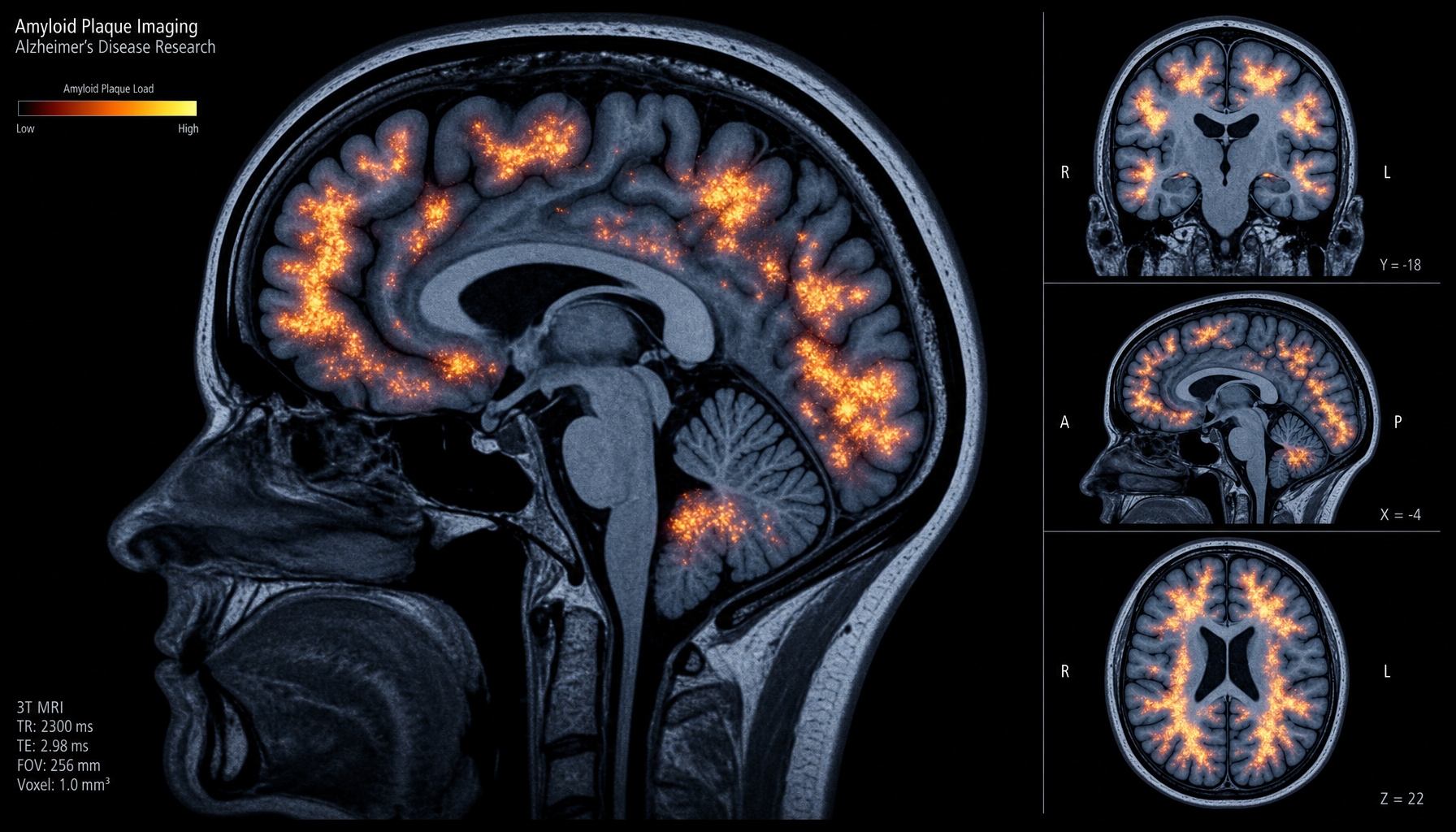
A New Era in Alzheimer's Treatment: Anti-Amyloid Combination Therapy Doubles Effects
Lecanemab receives full FDA approval, Donanemab Phase 3 succeeds, tau protein inhibitors take the baton — Alzheimer's is moving from untreatable to multi-target combination therapy
I. Alzheimer's Treatment at the Crossroads
Two decades of Alzheimer's disease (AD) drug development have been filled with failures — from bapineuzumab and solanezumab to aducanumab's controversial approval, the clinical value of anti-amyloid (anti-Aβ) therapy has long been debated. However, the landscape from 2023 to 2026 has fundamentally shifted.
With Lecanemab (Leqembi) receiving full FDA Traditional Approval, Donanemab (Kisunla) succeeding in Phase 3, and clinical breakthroughs in tau-targeting therapies, AD treatment is moving from "a single target fighting alone" to a new era of "precisely stratified combination therapy."
II. Anti-Amyloid Antibodies: From Accelerated Approval to Full Confirmation
2.1 Lecanemab (Leqembi) — Eisai / Biogen
Lecanemab is a humanized monoclonal antibody targeting Aβ protofibrils. Its mechanism of action differs from traditional anti-Aβ antibodies — it preferentially binds the most neurotoxic soluble Aβ aggregates rather than insoluble amyloid plaques.
Clarity AD Phase 3 Trial (NCT03887455):
- 1,795 patients with early AD (mild cognitive impairment or mild AD), 18-month follow-up
- Primary endpoint CDR-SB (Clinical Dementia Rating Sum of Boxes): treatment group declined 1.21, placebo declined 1.66, difference of 0.45 (27% slowing, p = 0.00005)
- Subgroup analysis: ApoE4 non-carriers benefited more (36% slowing in decline)
- All secondary endpoints (ADAS-Cog14, ADCOMS, ADCS-MCI-ADL) were significantly met
- Amyloid PET: treatment group Aβ burden decreased by 55.1 Centiloids (from moderately positive to below negative threshold)
In July 2023, the FDA approved Lecanemab with Traditional Approval (not accelerated approval), making it the first disease-modifying therapy to receive full approval in the AD field in 20 years. Open-label extension data published in 2025 further confirmed: patients receiving continuous treatment for 36 months maintained a rate of cognitive decline similar to the 18-month slowing, and the delayed-treatment group (starting medication after 18 months) could not catch up to the cognitive benefits of the early-treatment group — suggesting earlier treatment yields better outcomes.
Safety Focus: Lecanemab-associated ARIA (amyloid-related imaging abnormalities) incidence was 12.5% (ARIA-E edematous type) and 17.3% (ARIA-H hemorrhagic type), with symptomatic ARIA approximately 2.8%. Overall safety is far superior to aducanumab (ARIA-E 35%).
2.2 Donanemab (Kisunla) — Eli Lilly
Donanemab targets the N3pG-modified epitope of β-amyloid plaques. Its key difference from Lecanemab lies in its dosing regimen: when PET shows amyloid has been cleared to negative levels, treatment can be discontinued (titration-to-stop strategy), theoretically significantly reducing long-term treatment costs and ARIA risk.
TRAILBLAZER-ALZ 2 Phase 3 Trial:
- 1,736 early AD patients (stratified by amyloid PET and tau PET)
- Overall population (all tau levels): iADRS decline slowed by 22%, CDR-SB by 29%
- Low/medium tau subgroup (best responders): iADRS slowed by 35%, CDR-SB slowed by 36%
- 47% of treated patients achieved amyloid negativity within 12 months, allowing safe discontinuation
- ARIA-E incidence of 24.0% (symptomatic 3.7%), ARIA-H of 19.7%
Donanemab received FDA approval in 2024, but US prescribing information includes a black box warning about severe ARIA. In early 2026, Lilly announced interim data from TRAILBLAZER-ALZ 3 (a prevention trial for preclinical AD patients), showing that cognitively normal older adults with positive amyloid who received Donanemab had a 28% reduced risk of progressing to mild cognitive impairment (not statistically significant, but the trend was positive).
III. Tau Protein Inhibitors: The Next Treatment Frontier
Amyloid pathology is considered the "ignition switch" for AD, while tau protein neurofibrillary tangles serve as the "amplifier and executor." Simply clearing Aβ, while slowing disease progression, has limited effects on patients with significant tau pathology. Therefore, tau-targeted therapies have become the most watched new frontier in 2025-2026.
3.1 Anti-Tau Antibodies
- Eli Lilly — Remternetug (LY3372993): A next-generation anti-tau antibody targeting the microtubule-binding region (MTBR) of tau protein, capable of recognizing all isoforms of tau aggregates. TRAILBLAZER-ALZ 5 Phase 2 showed: after 24 weeks of treatment, CSF p-tau217 decreased by 40%, MTBR-tau levels decreased by 35%, but the clinical endpoint (CDR-SB) showed no significant difference at 12 months. Lilly is proceeding with Phase 3
- Biogen — BIIB080 (MAPTRx): A tau ASO therapy (not antibody) developed in partnership with Ionis, directly inhibiting tau mRNA translation to reduce total tau protein synthesis. Phase 1b data showed a single intrathecal injection reduced CSF tau levels by >50%, with durability >24 weeks. Phase 2 expected to complete in 2027
- Roche — RG7345 / semorinemab: Although it did not meet primary endpoints in Phase 1 and 2 trials, subgroup analysis suggested a potential benefit signal in mild AD patients. Roche is redesigning trial protocol for tau antibody dosing timing and regimen
3.2 Small Molecule Tau Aggregation Inhibitors
- TauRx — LMTX (leuco-methylthioninium): Approved in 35 countries for progressive supranuclear palsy (PSP), but again failed to meet endpoints in AD Phase 3 trials
- Acumen Pharmaceuticals — ACU193: Targeting Aβ oligomers, exploring combination with tau inhibitors in new Phase 2/3 trials
IV. Combination Therapy Strategies: From Single Combat to Coordinated Attack
As a multifactorial disease, combination therapy is clearly the logical endpoint for AD. The main combination regimens currently being validated include:
| Combination Regimen | Targets | Developer | Clinical Stage |
|---|---|---|---|
| Lecanemab + E2814 (anti-tau ASO) | Aβ + tau | Eisai + University College London | Phase 2 |
| Donanemab + Remternetug | Aβ + tau | Eli Lilly | Phase 2 (TRAILBLAZER-ALZ 6) |
| Gantenerumab + semorinemab | Aβ + tau | Roche / Genentech | Redesign phase |
| Lecanemab + BIIB092 (gosuranemab) | Aβ + tau (extracellular tau) | Biogen | Phase 1 |
| Donanemab + anti-inflammatory (colchicine) | Aβ + NLRP3 inflammasome | Lilly / Astellas | Phase 1 |
Beyond Aβ-tau combinations, other target combinations are also being explored:
- Aβ + inflammation inhibition: NLRP3 inflammasome inhibitors (NodThera's NT-0796) shown in Phase 1 to reduce CSF IL-1β and IL-6, with plans for combination with anti-Aβ antibodies
- Aβ + metabolic: GLP-1 receptor agonists (semaglutide) did not reduce cognitive decline in the EVOKE Phase 3 trial overall, but post-hoc analysis suggested ApoE4-carrying AD patients may benefit
- Multi-target immunotherapy: Eisai's E-2814, an antibody targeting tau's microtubule-binding region, is undergoing the world's first randomized controlled trial of AD combination therapy with Lecanemab
V. From Treatment to Prevention: Biomarker-Driven Early Intervention
The biggest paradigm shift in AD treatment is moving from "treating established disease" to "preventing disease before onset." In 2025-2026, validation of plasma biomarkers (particularly p-tau217) has made large-scale screening possible.
New Blood Biomarker Standards
- p-tau217: Achieves >90% sensitivity and specificity in distinguishing AD from other neurodegenerative diseases, approaching the accuracy of CSF and PET
- GFAP (glial fibrillary acidic protein): A marker of astrocyte activation that can be elevated 10-15 years before symptoms appear
- NfL (neurofilament light chain): A general marker of axonal damage, predicting disease progression rate
Lecanemab and Donanemab have already expanded their indications from "mild AD" to "mild cognitive impairment." If prevention trials succeed, indications will further expand to "preclinical AD" (amyloid-positive but cognitively normal).
VI. Market Outlook and Industry Landscape
Market Size
The AD drug market is projected to grow from $4.5 billion in 2023 (primarily from symptomatic treatments) to $35 billion by 2032, with anti-Aβ antibodies accounting for 55%, tau-targeted therapies 25%, and combination therapies 20%.
Payers and Pricing Pressure
- Lecanemab priced at $26,500 per year (US), but Medicare implemented "outcome-based contracts" in 2025 — Eisai must refund a portion of drug costs if cognitive benefits are not shown after 12 months of treatment
- Donanemab priced at $32,000 per year, also facing payer pressure
- Combination therapies exceeding $50,000 per year may encounter insurance coverage barriers
VII. Future Outlook
- 2027: Lecanemab's AHEAD 3-45 prevention trial (preclinical AD) results; if successful, it will be the first proof that "clearing Aβ before symptoms appear can delay or prevent AD onset"
- 2027-2028: Anti-tau antibody (Remternetug) Phase 3 results; if successful, AD treatment will formally enter the "anti-amyloid + anti-tau" dual-target standard era
- 2028-2030: Routine screening based on plasma p-tau217 incorporated into geriatric health checkups; early AD patients can receive disease-modifying therapy at the mild cognitive impairment stage
- 2030+: Clinical implementation of personalized combination regimens (Aβ clearance → tau inhibition → neural regeneration), supplemented by stem cell therapy and neurotrophic factors; AD may transform into a manageable chronic disease
Conclusion
From aducanumab's controversy to Lecanemab's full approval, from Donanemab's discontinuation strategy to tau-targeted therapy's clinical breakthroughs, Alzheimer's treatment is experiencing a true renaissance. While still far from a "cure," the progress of 2025-2026 sends a clear signal to patients, families, and clinicians: AD is no longer indisputably untreatable. Active early intervention is bringing tangible hope to the 55 million dementia patients worldwide and their caregivers.
POC.HK Future Technology Observatory — Independent Technology Watch Report