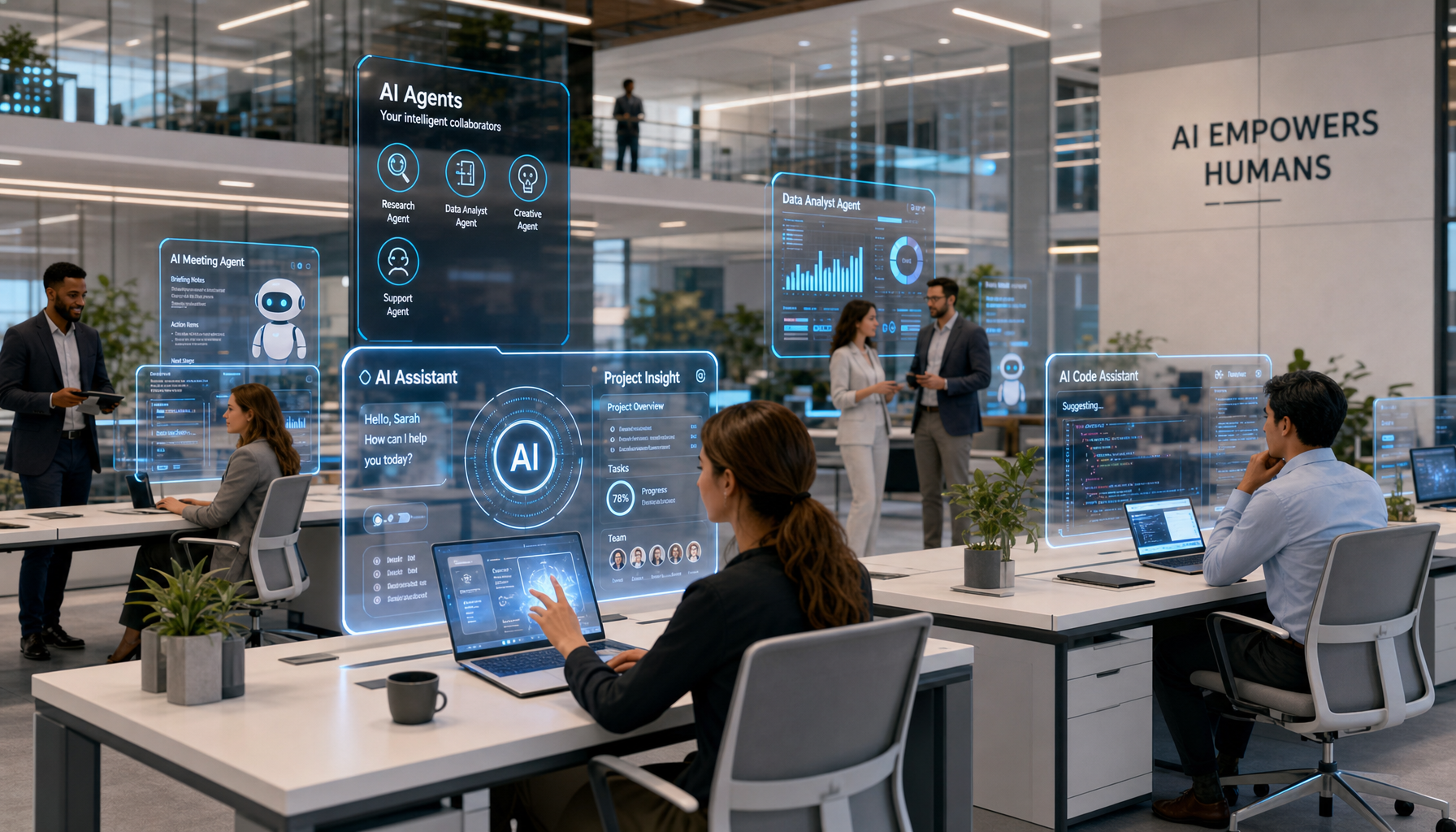
Enterprise AI Agents: From Chatbots to Autonomous Workflows
Enterprise AI applications are undergoing their third wave. The first was rule-based chatbots (2015-2018), the second was LLM-driven conversational AI (2022-2024), and the third is AI agents capable of independently completing complex business processes.
The key capability of modern enterprise AI agents lies in "tool use." Salesforce Agentforce, ServiceNow Now Assist, and Microsoft Copilot Studio have all launched mature agent platforms, allowing AI to access CRM, ERP, email systems, and databases. For example, a customer service agent can: query customer order history → determine return eligibility → generate return labels → update inventory systems → send confirmation emails — all without human intervention.
Early deployment data is encouraging. ServiceNow reports that customers adopting AI agents saw average case resolution time reduced by 70%, with first-contact resolution rates rising from 45% to 82%. In data analysis scenarios, AI agents can automatically generate weekly reports, flag anomalous trends, and even write explanatory annotations — freeing analysts from repetitive work.
However, large-scale deployment still faces obstacles. Security is the primary concern — AI agents need access to sensitive data, and any permission misconfiguration could lead to data leakage. Accountability for AI decisions is equallychallenging: when an agent makes a wrong refund decision, who bears responsibility? Enterprises are managing risk through "human-in-the-loop" approval gates — agents can perform operations, but all high-risk actions require human confirmation.
Looking ahead, AI agents will evolve from "single-task executors" to "workflow designers" — not simply executing predefined processes, but autonomously designing and optimizing workflows based on objectives. At that point, a company's competitive advantage will no longer depend on how many employees it has, but on how many AI agents it deploys and how well it manages them.